
In off-grid living, solar generators are a reliable way to power your home, cabin, or campsite without depending on fuel. They’re quiet, safe for indoor use, and offer expandable energy storage, making them an ideal choice for emergencies, long-term setups, or outdoor adventures.
Here’s what you need to know:
- Power Capacity: Options range from small models like the Goal Zero Yeti 1000 Core (1,000Wh) to heavy-duty systems like the EcoFlow DELTA Pro (up to 12,000Wh with expansion).
- Portability: Lightweight models like the EcoFlow River 2 Pro are great for mobility, while larger units like the ALLPOWERS R4000 are better for permanent setups.
- Charging Efficiency: Look for solar panels with at least 20% conversion efficiency for quicker recharges.
- Durability: Choose weather-resistant designs and LiFePO4 batteries for long-lasting performance.
- Smart Features: Many generators, like the Bluetti AC200 Max, include app-based controls for easy monitoring.
Quick Comparison:
| Model | Capacity (Wh) | Output (W) | Weight (lbs) | Expandable | Price Range (USD) |
|---|---|---|---|---|---|
| Bluetti AC200 Max | 2,048–8,192 | 2,200 | 61.9 | Yes | $1,599–$1,799 |
| EcoFlow DELTA Pro | Up to 12,000 | 4,500 | ~100 | Yes | $3,599–$3,999 |
| ALLPOWERS R4000 | 3,456 | 3,600 | ~99 | No | $1,999 |
| Jackery Explorer 5000+ | 5,040 | 3,000 | ~61 | No | $4,999–$5,499 |
| Goal Zero Yeti 1000 Core | 1,000 | 1,500 | 31.7 | No | $999–$1,199 |
Solar generators are essential for maintaining power in remote areas or during outages. Whether you need a portable option for camping or a high-capacity system for your home, there’s a model to match your needs.
Best Solar Generators For Off Grid Living- Which Is the Best for YOUR NEEDS! ?
How to Choose the Right Solar Generator
Selecting the right solar generator involves carefully evaluating several factors to ensure reliable power for your off-grid needs.
Power Output and Battery Size
Understanding wattage and watt-hours is crucial. Wattage (W) measures the immediate power a solar generator can supply, while watt-hours (Wh) indicate the total energy storage capacity - essentially, how long the generator can sustain its output. For example, the ALLPOWERS R600 offers a 600W continuous output with a 299Wh capacity, making it ideal for smaller devices like laptops and phones. On the other hand, the ALLPOWERS R4000 delivers 3,600W with a 3,456Wh capacity, making it suitable for powering larger appliances.
If you're planning a long-term off-grid setup, battery expandability is a game-changer. The Bluetti AC200 Max starts with a 2,048Wh capacity but can be expanded to 8,192Wh by adding extra batteries. Similarly, the EcoFlow Delta 2 Max supports up to two additional batteries, reaching a total of 6,144Wh. To find the right fit, calculate your daily energy needs by listing all appliances, their wattage, and usage hours. Then, add a 20–30% safety margin. For flexibility, the EcoFlow Delta 2 Max can power up to 15 devices at once, making it a versatile option for a variety of setups.
Next, think about how easily you can transport your generator, depending on your lifestyle.
Weight and Portability
Portability matters, especially if you're frequently on the move. Compact models like the ALLPOWERS R600 or the EcoFlow River 2 Pro are lightweight and easy to transport, making them perfect for mobile setups. For more permanent installations, such as cabins or homesteads, heavier units like the ALLPOWERS R4000 or Bluetti AC200 Max are more practical since mobility is less of a concern. If you're in a smaller space, like a camper or hunting shack, the R2500 offers a balanced option - enough power without being too bulky.
Solar Panel Setup and Charging Speed
Efficient solar panels are essential for quick charging and consistent energy production, even under less-than-ideal weather conditions. For instance, the ALLPOWERS SP027 panel boasts a 22% energy conversion rate, while the ALLPOWERS SP039 600W panels can fully charge the R4000 in just a few hours on a sunny day. Faster charging not only reduces downtime but also enhances energy independence. Lightweight options like the Jackery SolarSaga 100 and the Luvknit 100W Foldable panel are great for portability and efficient energy conversion. Look for panels with at least 20% conversion efficiency to ensure reliable performance in varying conditions.
Build Quality and Weather Protection
Durability is critical for off-grid setups, especially in harsh environments. The Goal Zero Yeti 1000 Core is a standout example, built with a tough exterior shell designed to handle rugged outdoor conditions. Similarly, the ALLPOWERS SP033 200W solar panels feature a foldable, weather-resistant design that’s easy to deploy. For extreme climates, opt for generators with LiFePO4 batteries and weatherproof enclosures to guard against moisture, temperature swings, and physical damage. The Bluetti Pioneer Na, for example, performs well in severe cold. Checking for IP ratings and durable battery chemistry can help ensure your generator is up to the challenge.
Finally, consider smart features and pricing to refine your choice.
Smart Controls and Pricing
Smart controls can make off-grid living more efficient by allowing you to monitor energy usage, track battery levels, and manage your system remotely. For instance, the ALLPOWERS R4000 includes Wi-Fi and Bluetooth capabilities, enabling wireless monitoring of your power station. The Bluetti AC300 offers similar remote control features, while the Bluetti Elite 200 V2 provides real-time data on power consumption and battery status with its upgraded LiFePO4 system. While smart features may increase the cost, they provide valuable insights into energy management. For example, the ALLPOWERS R4000 is priced at $1,999 (down from $3,299), while smaller models like the R600 are more budget-friendly. When comparing prices, weigh whether the added convenience of smart controls is worth the investment for your off-grid needs.
Best Solar Generators for Off-Grid Living
Here’s a breakdown of some of the top solar generators, each designed to meet a range of off-grid power needs. These picks excel in power output, portability, and efficient solar charging.
ALLPOWERS R4000 Portable Power Station
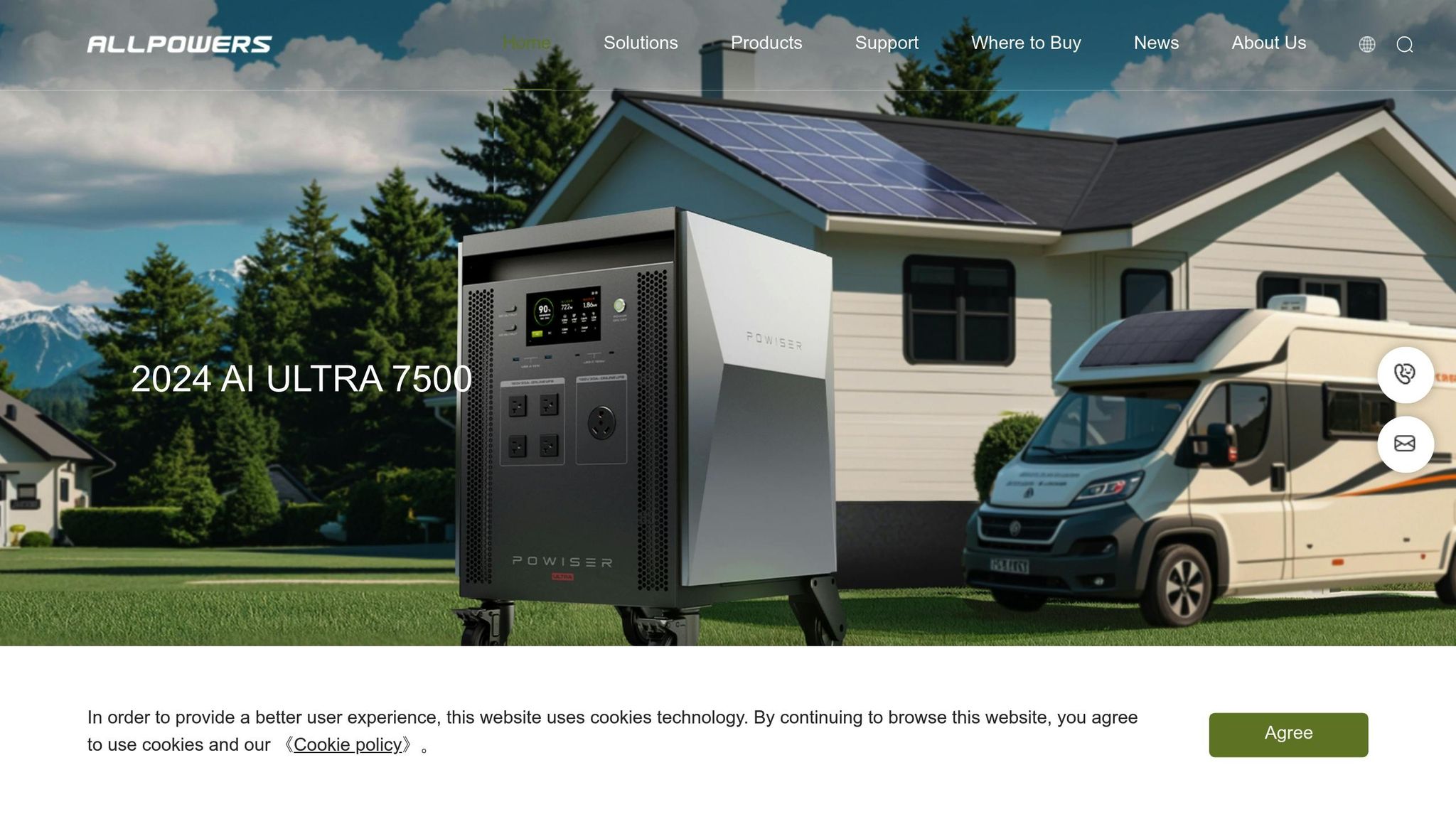
The ALLPOWERS R4000 packs a hefty 3,456Wh capacity with a 3,600W continuous output (6,000W surge), making it a powerhouse for running heavy-duty appliances like refrigerators, power tools, and even small air conditioners. One standout feature is its incredible charging speed - fully recharged in just 1.2 hours when paired with the right solar panels. It also includes Wi-Fi and Bluetooth connectivity for remote monitoring. However, its weight makes it better suited for permanent or semi-permanent setups like off-grid homes, workshops, or cabins.
EcoFlow DELTA Pro Solar Generator
The EcoFlow DELTA Pro offers unmatched scalability, expanding up to 12,000Wh with extra battery modules. Its 4,500W output easily handles high-demand appliances, and its modular design allows you to grow your system as your energy needs evolve. Built with weather-resistant materials and LiFePO4 battery technology, it’s designed for durability and safety. Smart monitoring features let you control and manage the system wirelessly, making it an excellent choice for critical off-grid applications.
Bluetti AC200 Max

Starting with a 2,048Wh capacity, the Bluetti AC200 Max can expand to 8,192Wh with add-on battery packs. It includes a 30A RV plug for direct connection to recreational vehicles and features wireless charging pads for added convenience. With support for up to 1,400W of solar input, it charges quickly even with a mid-sized solar array. Whether you’re camping in the summer or heating a cabin in the winter, this generator is versatile enough for various off-grid scenarios.
Jackery Explorer 5000 Plus
The Jackery Explorer 5000 Plus boasts a 5,040Wh capacity and a 3,000W output, making it ideal for extended off-grid living. Its fast solar charging and high efficiency minimize power loss, ensuring reliable energy for essential systems like communications, medical equipment, and food preservation. Built for durability, it’s a dependable option for homesteaders and remote workers who need consistent power.
Goal Zero Yeti 1000 Core
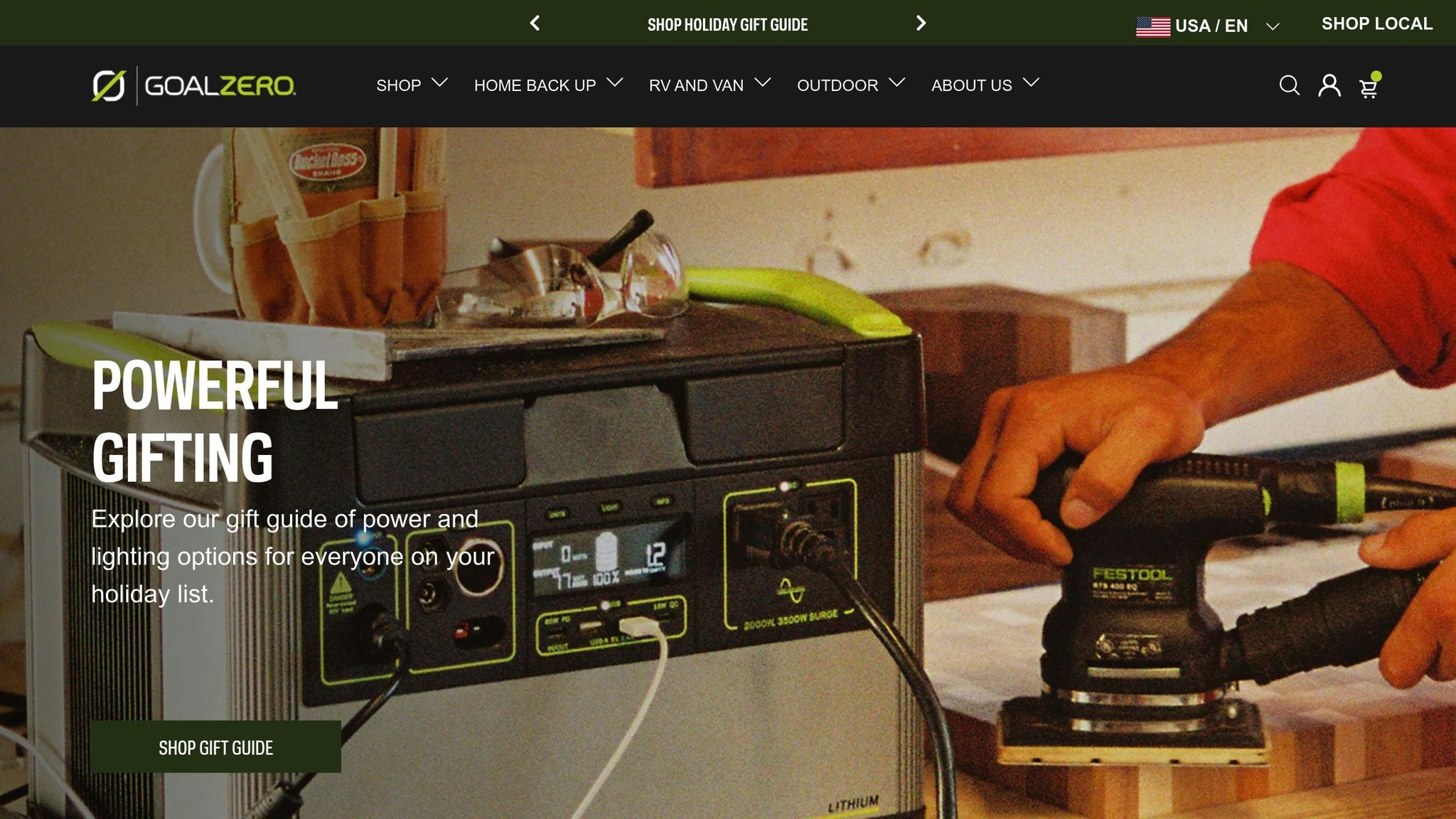
Compact and portable, the Goal Zero Yeti 1000 Core offers a 1,000Wh capacity and a 1,500W output. Its rugged design handles bumps and weather exposure, making it a favorite among campers and RV enthusiasts. This generator powers essentials like lights and communication devices for several days. Its lightweight, portable build makes it easy to move around, perfect for weekend camping trips, emergency power, or as a secondary source in larger off-grid setups.
| Generator | Capacity | Output | Key Feature | Best For |
|---|---|---|---|---|
| ALLPOWERS R4000 | 3,456Wh | 3,600W | Ultra-fast charging (1.2 hours) | Permanent off-grid homes |
| EcoFlow DELTA Pro | Up to 12,000Wh | 4,500W | Maximum expandability | Scalable, mission-critical use |
| Bluetti AC200 Max | 2,048–8,192Wh | 2,200W | Modular flexibility | Diverse off-grid scenarios |
| Jackery Explorer 5000+ | 5,040Wh | 3,000W | Long-term reliability | Extended remote living |
| Goal Zero Yeti 1000 Core | 1,000Wh | 1,500W | Rugged portability | Mobile and camping use |
These solar generators are designed to seamlessly fit into off-grid setups, offering reliable power for various needs. Whether you’re building a full off-grid system or just looking for portable backup power, these options integrate well with other preparedness tools. AgentXSurvival also provides resources for combining solar power with water systems, emergency communications, and food storage to create a well-rounded off-grid lifestyle.
sbb-itb-1666494
Solar Generator Comparison Chart
Here’s a breakdown of top solar generators to help you find the best fit for your off-grid power needs. The table below highlights key specs, making it easier to weigh options based on power, portability, and performance.
| Model | Capacity (Wh) | Continuous Output (W) | Weight (lbs) | Solar Input (W) | Expandable | Battery Type | Price Range (USD) | Best For |
|---|---|---|---|---|---|---|---|---|
| Bluetti AC200 Max | 2,048 | 2,200 | 61.9 | 1,400 | Yes (up to 8,192Wh) | LiFePO4 | $1,599–$1,799 | Extended off‑grid, RV |
| EcoFlow Delta 2 Max | 2,048 | 2,400 | ~50 | ~1,000+ | Yes (up to 6,144Wh) | LiFePO4 | $1,899–$2,099 | Home backup, off‑grid |
| Jackery Explorer 5000 Plus | 5,000 | 3,000 | ~61 | 1,400 | No | Li‑ion | $4,999–$5,499 | Whole‑home, off‑grid |
| Goal Zero Yeti 1000 Core | 983 | 1,200 | ~31.7 | 600 | No | LiFePO4 | $999–$1,199 | Camping, light off‑grid |
| Bluetti Elite 200 V2 | 2,600 | 2,600 | ~62 | 1,200 | No | LiFePO4 | ~$1,799 | Emergency, off‑grid |
Charging Speed is a standout feature among these models. The Bluetti AC200 Max leads the pack with its quick recharge times, while the EcoFlow Delta 2 Max takes longer to fully charge via solar panels under optimal conditions.
Battery Longevity is another critical factor. Generators with LiFePO4 batteries, like the Bluetti AC200 Max and EcoFlow Delta 2 Max, are built to last. These batteries can handle up to 3,000 charge cycles, translating to about 8–10 years of regular use. In contrast, lithium-ion batteries, such as those in the Jackery Explorer 5000 Plus and Goal Zero Yeti 1000 Core, typically last for 4–5 years with around 1,000–1,500 cycles.
Expandable Capacity is a game-changer for growing power needs. Both the Bluetti AC200 Max and EcoFlow Delta 2 Max allow modular expansion, making them flexible options for those anticipating higher energy demands. On the other hand, the Jackery Explorer 5000 Plus and Goal Zero Yeti 1000 Core are fixed systems with no capacity upgrade options.
Portability varies significantly across models. The Goal Zero Yeti 1000 Core is lightweight and offers about 31 Wh per pound, making it perfect for camping or mobile use. Meanwhile, the Jackery Explorer 5000 Plus delivers an impressive 82.6 Wh per pound, but its weight makes it better suited for stationary setups. The EcoFlow Delta 2 Max strikes a balance with approximately 41 Wh per pound.
Design and usability also play a big role. Smart Features like app-based controls and versatile port configurations enhance convenience. The EcoFlow Delta 2 Max can power up to 15 devices simultaneously, while the Bluetti AC200 Max includes wireless charging and a 30A RV plug for direct mobile connections.
Choosing the right solar generator depends on your priorities. Whether you value high capacity, quick charging, portability, or the ability to expand, this comparison highlights the best options for achieving reliable off-grid energy.
Adding Solar Generators to Your Off-Grid Setup
Incorporating a solar generator into your off-grid system can redefine how you manage power in remote or emergency situations. Once you’ve chosen the right generator, the next step is to integrate it effectively into your survival setup.
Start by calculating how much energy you consume daily. For instance, the ALLPOWERS R4000 offers a hefty 3,456Wh capacity and 3,600W output, making it an ideal centerpiece for larger setups. On the other hand, smaller models like the Goal Zero Yeti 1000 Core are great for minimalist configurations.
Solar generators are incredibly versatile. They can power everything from water pumps and filtration systems to UV sterilizers. Take the Bluetti AC200 Max, for example - it can handle up to 1,400W of solar input, allowing for quick recharges after heavy use. Generators with multiple output options - such as AC, DC, USB, and even specialty plugs like the 30A RV connector on the AC200 Max - ensure compatibility with a wide range of devices, including communication equipment, medical devices, and food storage tools.
Building redundancy into your system is key to achieving true energy independence. This means having backup options for times when solar input is limited, like during extended cloudy weather or winter months. Resources like AgentXSurvival can guide you in integrating additional survival systems to bolster your setup.
Monitoring and planning are critical for long-term success. Many modern solar generators come with smart features to help manage your system efficiently. For example, the ALLPOWERS R4000 includes Wi-Fi and Bluetooth controls, allowing you to remotely monitor battery levels and power usage. Similarly, the Bluetti AC300 offers wireless monitoring, so you can track performance directly from your smartphone - even in remote areas.
Seasonal changes also play a big role in off-grid planning. In the U.S., solar energy production can drop by 40–60% during winter compared to summer. To prepare for these seasonal dips, aim for a battery capacity that can provide 3–5 days of power without any solar input. Expandable systems like the EcoFlow Delta 2 Max, which can scale up to 6,144Wh, are perfect for storing excess summer energy to use in winter.
For those committed to off-grid living, it’s also wise to prepare for extreme scenarios like EMPs or grid failures. AgentXSurvival offers resources such as Faraday covers and blackout tools to shield your solar generator system from electromagnetic pulses or prolonged outages.
A modular approach works best when building your setup. Start with one generator and expand as needed. This strategy not only keeps things manageable but also ensures scalability and resilience. Be sure to document your system’s configuration to make maintenance easier down the line.
Finally, integrate your solar generator with other survival tools to maximize resilience. Reliable power can enhance systems for food storage, water filtration, herbal remedies, and even self-defense. AgentXSurvival offers solutions tailored to these needs. When possible, stick to equipment from the same manufacturer to ensure compatibility. For example, the Bluetti Elite 200 V2 combines compact automotive-grade battery cells with substantial storage, offering a balance of portability and capacity.
Conclusion
To wrap up, solar generators have become a game-changer for anyone serious about off-grid preparedness. These systems have transitioned from niche tools to practical, reliable solutions for maintaining energy independence when traditional power grids fail.
Today's solar generators excel in areas like fast charging, high power output, and durable battery technology. With features like smart monitoring, they’re built to handle the tough demands of long-term off-grid use. Their portability and ability to expand make them a versatile option for everything from emergency preparedness to extended outdoor adventures.
What sets solar generators apart is their ability to deliver power without relying on fuel. They can keep critical devices running - like communication tools, refrigerators, or medical equipment - which are essential for staying functional and safe during emergencies.
These aren't just backup power sources; they enhance your overall off-grid strategy. Whether you're bracing for blackouts, preparing for grid failures, or planning extended time in remote areas, solar generators provide the reliability and flexibility you need to stay ahead when conventional systems let you down.
For anyone focused on self-reliance and long-term preparedness, solar generators are more than just tools - they’re essential building blocks for ensuring you can weather any challenge with confidence and capability.
FAQs
To pick the best solar generator for your needs, start by figuring out your energy usage. Add up the wattage of the devices and appliances you plan to power, and estimate how many hours you'll use them daily. Choose a generator with a watt-hour capacity that not only meets your energy needs but also includes a buffer for unexpected use.
Portability and features are also key factors. If you’ll be moving it frequently, go for a lightweight and compact design. For those planning long-term off-grid use, focus on models with strong durability, long battery life, and seamless compatibility with solar panels. Choosing the right generator ensures dependable power when you need it most.
LiFePO4 (Lithium Iron Phosphate) batteries bring several clear benefits, especially when used in solar generators. One major advantage is their long lifespan. These batteries can handle 2,000–5,000 charge cycles, far outlasting the typical 500–1,000 cycles of standard lithium-ion batteries. This extended durability makes them a great choice for off-grid setups or frequent use.
Another standout feature is their safety. Thanks to their chemical stability, LiFePO4 batteries are less prone to overheating or fire hazards, offering peace of mind during operation. Plus, they deliver consistent power output, even as the battery charge gets low, which is crucial for powering essential devices.
Although they may come with a higher initial cost, their extended life and dependable performance often make them a more economical option over time.
To make the most of a solar generator in your off-grid system, begin by evaluating your energy needs. Ensure the generator's power capacity aligns with what your setup requires. Place the generator where it can get the most sunlight, and use the correct cables and adapters to connect it to your battery bank or directly to your appliances.
For step-by-step instructions and maintenance tips, consult trusted resources that specialize in off-grid living and survival techniques. A well-planned integration not only ensures dependable power but also helps extend the life of your equipment.