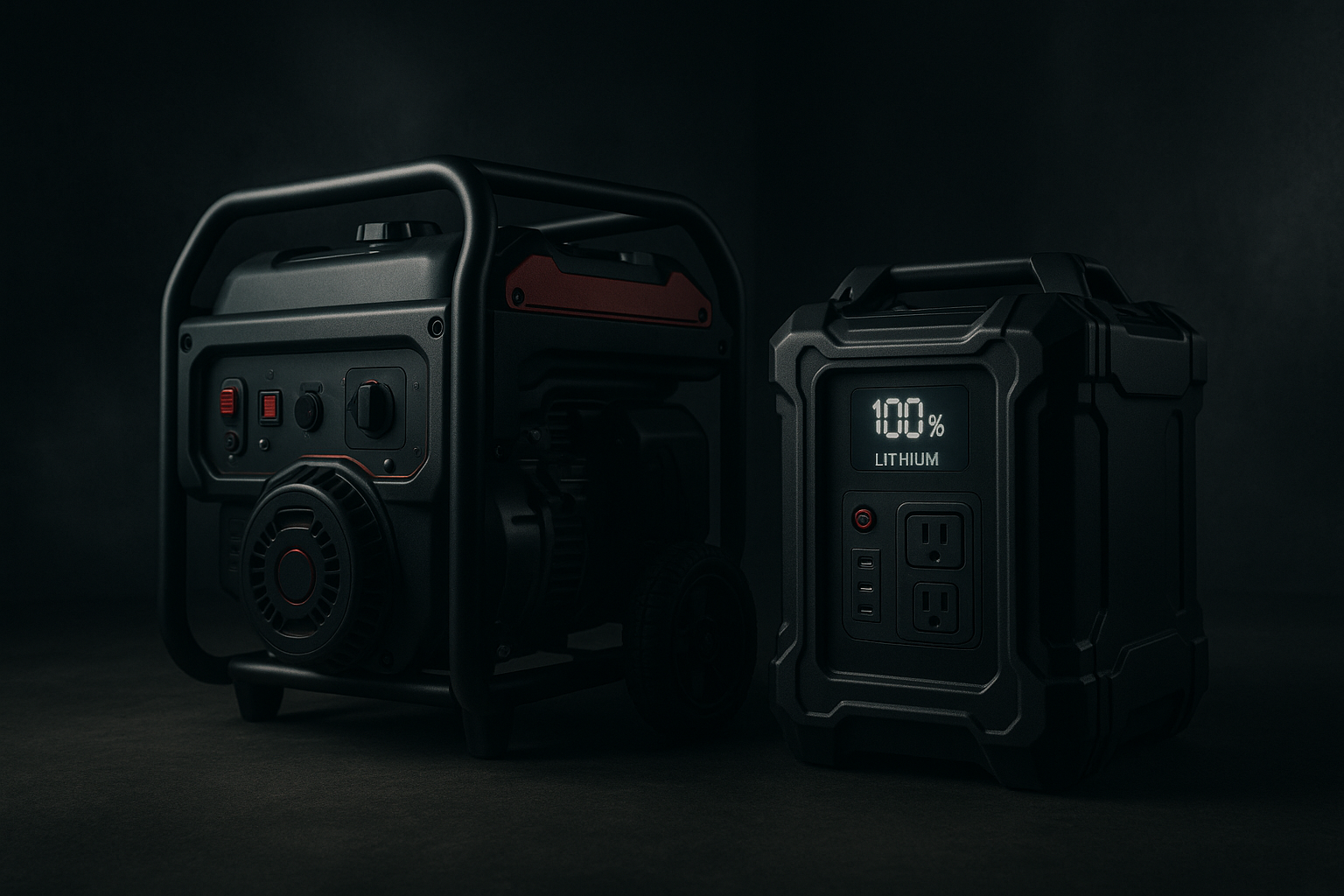
When the power goes out, the choice between a generator and a battery system can make a big difference. Here’s a quick comparison:
- Generators: Use fuel (gas, propane, or diesel) to produce electricity. They’re great for long outages and high power needs but are noisy, require regular maintenance, and emit exhaust gases.
- Battery Systems: Store electricity from the grid or solar panels. They’re quiet, emission-free, and low-maintenance but have limited runtime and higher upfront costs.
Quick Comparison
| Feature | Generators | Battery Systems |
|---|---|---|
| Power Output | Supports entire home | Best for essential devices |
| Runtime | Continuous with fuel supply | Limited by stored energy |
| Noise Levels | Noticeable engine noise | Silent operation |
| Emissions | Emits exhaust gases | Zero emissions |
| Maintenance | Regular upkeep needed | Minimal maintenance |
| Upfront Costs | Lower initial cost | Higher initial cost |
| Long-Term Costs | Ongoing fuel expenses | Lower operational expenses |
| Renewable Energy | Not compatible | Pairs with solar panels |
Key Takeaway: Generators are better for extended outages and heavy power loads, while battery systems excel in quiet, short-term power needs and are ideal for eco-friendly setups. A hybrid approach combining both can offer the best of both worlds.
Batteries vs Generators: Which is Better?
Generator Systems Explained
Generators are devices that convert fuel into electricity whenever needed, using internal combustion as their core mechanism. Let’s delve into how these systems work and the various types available.
How Generators Work
Most generators rely on two main components: an internal combustion engine and an alternator. The engine burns fuel to create mechanical energy, which then spins a rotor within a magnetic field to produce electricity. Residential generators often use a four-stroke cycle, ensuring a steady supply of power. Standby generators take this a step further by incorporating an automatic transfer switch. This switch continuously monitors your home's electrical supply and, during an outage, activates the generator and redirects power from the grid to your home. With this understanding, we can now explore the different types of generators available.
Types of Generators
Generators come in several forms, each designed to meet specific power needs:
-
Portable Generators: These are compact, wheeled units that offer flexible and affordable power for essential uses. They typically run on gasoline, propane, or dual-fuel systems and require manual startup during outages. Portable generators are perfect for powering critical appliances during emergencies.
-
Standby Generators: Permanently installed outside your home, standby generators provide seamless whole-house backup power. They connect directly to your electrical panel and automatically start when the power goes out. Fueled by natural gas or propane, they eliminate the hassle of manual refueling during extended outages.
-
Inverter Generators: These generators produce cleaner and more stable electricity, making them ideal for sensitive electronics like laptops and medical devices. They adjust engine speed based on the power demand, offering quieter operation and improved fuel efficiency compared to traditional portable generators - especially valuable during long outages.
Generator Considerations and Examples
When selecting a generator, several factors should guide your decision:
-
Runtime and Fuel Consumption: A generator’s fuel consumption depends on its size and the electrical load it supports. Mid-sized portable generators, commonly used for essential appliances, consume fuel at a moderate rate. For extended outages, plan for periodic refueling.
-
Noise Levels: Traditional generators can be quite loud, while inverter models are designed for quieter operation. This makes inverters a better choice for residential areas or camping trips.
-
Maintenance: Regular upkeep is critical to ensure reliable performance. Tasks like oil changes, air filter replacements, and spark plug checks are standard. Some standby models even feature self-diagnostic systems that alert you when maintenance is required.
-
Safety: Generators emit carbon monoxide, a dangerous gas. Always operate them outdoors in a well-ventilated area, away from windows, doors, and air intakes, to keep exhaust fumes from entering your home.
-
Fuel Availability: Standby generators fueled by natural gas or propane benefit from direct utility connections, making them more convenient during prolonged outages. On the other hand, portable generators using gasoline or diesel may face fuel supply challenges, especially during widespread emergencies.
Battery Backup Systems Explained
Battery backup systems take a different approach to emergency power compared to traditional generators. Instead of producing electricity on demand, these systems store energy in advance, ready to step in instantly when the grid goes down.
How Battery Systems Work
Battery backup systems rely on rechargeable lithium-ion cells to store energy, which is immediately available during a power outage. An inverter converts the stored direct current (DC) into alternating current (AC) to power your home. An automatic transfer switch ensures a smooth transition, activating the backup system the moment an outage occurs. Once the grid power is restored, the system switches back and begins recharging the batteries, preparing for the next potential disruption.
Modern systems can draw power from multiple sources. While they typically charge from the grid, they can also integrate with solar panels, allowing you to store renewable energy. This dual charging capability makes them a practical and versatile choice for emergency power, offering a quicker, automated response compared to generators.
Battery System Benefits
One of the standout features of battery backup systems is their quiet operation. Unlike noisy generators, these systems run silently, making them ideal for indoor use. They are emission-free, which means you can safely install them in various locations inside your home, whether on a wall, the floor, or in a temperature-controlled space.
Battery systems also pair seamlessly with solar panels, providing an eco-friendly way to store and use clean energy. Maintenance is minimal, typically limited to occasional monitoring and battery replacement every 8–15 years.
"Solar battery backup systems provide clean, silent, and sustainable energy storage by capturing solar power and releasing it during outages or at night. They offer long-term savings, low operating costs, and reduce carbon footprint..." – Prostar Solar
Their flexible installation options make them a great fit for apartments, condos, or homes where outdoor generator setups might not be practical. This adaptability enhances their appeal for a wide range of living situations.
Battery System Drawbacks
Despite their many advantages, battery systems do come with some limitations. One of the primary challenges is their limited runtime. Once the stored energy is used up, the system either needs to recharge or wait for grid power to return. This makes them less suitable for extended outages unless paired with a consistent energy source, like solar panels.
Upfront costs can also be a hurdle. Battery systems typically require a larger initial investment compared to generators, although their lower long-term operating costs can offset this over time. Another limitation is their power output. While generators can often handle heavy-duty appliances like central air conditioning or electric water heaters, battery systems are usually best for essential devices like refrigerators, lighting, and communication equipment.
Even with these drawbacks, the popularity of home battery backup systems is on the rise, with demand projected to grow by 20% annually. Weighing these factors carefully will help you decide if a battery backup system fits your emergency power needs and budget.
sbb-itb-1666494
Generator vs Battery System Comparison
When choosing between generators and battery systems for emergency power, understanding their differences can help you make an informed decision. Both options have strengths and limitations, and the right choice depends on your specific needs.
Feature Comparison Table
Here's a side-by-side look at key features of generators and battery systems:
| Feature | Generators | Battery Systems |
|---|---|---|
| Power Output | Designed to support entire household power needs | Typically suited for essential appliances only |
| Runtime | Can run continuously with a steady fuel supply | Limited by stored energy capacity |
| Noise Levels | Generate noticeable engine noise | Operate almost silently |
| Emissions | Produce exhaust gases | Zero on-site emissions |
| Maintenance | Require regular upkeep and fuel management | Need occasional battery replacement, with less frequent maintenance overall |
| Upfront and Operating Costs | Lower initial cost but ongoing fuel expenses | Higher upfront cost, balanced by lower operational expenses |
| Installation | Usually requires outdoor placement and professional setup | Can be installed indoors or outdoors with flexibility |
| Renewable Integration | Typically not compatible with renewable energy | Can pair with solar panels for recharging |
Generators are ideal for delivering continuous power and have a lower initial cost, while battery systems excel in quiet operation, low maintenance, and environmental friendliness. Your priorities - whether they focus on cost, convenience, or sustainability - will guide your choice.
Survival Scenario Performance
When it comes to real-life emergencies, the performance of generators and battery systems varies based on the situation. Each shines under different conditions.
Battery systems are a great choice for short outages, efficiently powering essential devices without noise or emissions. However, during extended outages lasting several days, generators tend to be more reliable as long as fuel is available. If you're using a battery system in a prolonged outage, renewable sources like solar panels can help recharge it, but this setup requires planning.
For longer emergencies, generators offer extended runtime, but fuel availability becomes a key concern. In widespread crises, sourcing fuel can be difficult, so having a proper storage plan is crucial.
Location also plays a major role in the decision. In urban areas, where space is limited and noise restrictions are common, a battery system might be more practical. On the other hand, rural settings often provide the space and flexibility needed for generator installations and fuel storage. Additionally, weather conditions can influence performance - cold temperatures reduce battery efficiency and complicate generator maintenance, while extreme heat can strain battery capacity.
For many, a hybrid approach is becoming the go-to solution. Combining the quiet, immediate power of a battery system with the long-term reliability of a generator offers a well-rounded strategy to handle diverse emergency needs. This setup ensures you’re prepared for both short-term outages and extended disruptions.
How to Choose the Right Solution
Picking the right backup power solution means weighing your power needs, outage duration, budget, living space, and maintenance capabilities. Building on the system comparisons mentioned earlier, here are some key factors to consider when finding the best fit for your situation.
Decision Factors to Consider
Start by estimating your power needs. Add up the wattage of essential appliances using their specifications. For example, powering your entire home, including heating and cooling systems, requires a system with a much higher capacity than one designed to handle just the basics, like lights, phones, or medical devices.
Think about the typical length of outages in your area. Battery systems are great for short-term outages, while generators are better suited for longer interruptions. Checking your local utility's outage history can help guide this choice.
Budget is another key consideration. Generators generally cost less upfront but come with ongoing fuel and maintenance expenses. On the other hand, battery systems have a higher initial cost but lower long-term upkeep.
Your living environment also plays a role. Urban homes with limited space and noise restrictions often favor battery systems. In contrast, rural properties can more easily accommodate generators, including their outdoor installation and fuel storage needs.
Finally, factor in maintenance. Generators require regular care, like periodic test runs and seasonal servicing. Battery systems, however, are typically much lower maintenance.
Best Use Cases for Each System
Each system shines in specific situations:
- Generators are ideal for homes with high power demands or extended outage needs. They work especially well for properties with heavy appliances like well pumps or electric heating, provided there's adequate space for installation and fuel storage.
- Battery systems are perfect for quiet, instant power. They’re a great choice for urban homes, eco-friendly setups, or installations with solar integration. They’re also reliable for powering essentials like medical devices or home offices.
- Hybrid systems combine the strengths of both - a battery for immediate power and a generator for prolonged outages.
Keep in mind that extreme weather can impact performance. Cold conditions may reduce battery efficiency and make generator starting harder, while hot climates might require extra cooling. In sunny areas, solar-battery combos are especially effective.
AgentXSurvival Resources for Custom Solutions
AgentXSurvival offers resources to help you tailor your backup power setup. For example:
- The Lost Generator project teaches you how to build a thermal power generator.
- The Aqua Tower project provides guidance on creating an off-grid water generator.
They also offer EMP and grid-down protection guides, with practical tips like using Faraday covers to safeguard the electronic components of your battery systems. Their solar backup integration materials can help you maximize renewable energy options based on your location and specific power needs.
Beyond power, AgentXSurvival's blackout preparation resources cover food preservation, communication systems, and security strategies. This ensures your backup power solution is part of a broader emergency preparedness plan.
Final Thoughts
Generators and battery systems each cater to different needs, offering distinct benefits depending on your situation, power requirements, and emergency preparedness plans. While generators are ideal for extended, high-demand outages, battery systems stand out for their quiet, instant, and low-maintenance operation.
The growing need for reliable backup power is hard to ignore. Weather-related power outages in the U.S. have increased by 80% from 2011 to 2023, and 84% of Americans express concern about the rising frequency of outages. These numbers highlight the importance of having a dependable backup power solution in place.
Choosing between these options depends on your specific circumstances. If you live in an urban area with limited outdoor space, a battery system - especially when paired with solar panels - might be a better fit. On the other hand, rural homeowners with higher energy needs and room for fuel storage may find a generator more practical. For even greater flexibility and resilience, hybrid systems that combine both technologies can be a smart choice.
It’s worth noting that the 30% federal solar tax credit for battery systems is set to expire on December 31, 2025. If you're considering a battery system as part of your emergency preparedness plan, now might be the right time to make the investment.
Your backup power solution should be part of a larger emergency preparedness strategy. Resources from AgentXSurvival can help you take a comprehensive approach, offering guidance on projects like the DIY Lost Generator thermal power system, EMP protection, the Aqua Tower project, and blackout preparation. These tools can help you build a well-rounded plan to stay ready for any situation.
Whether you opt for a generator, a battery system, or a combination of both, the most important step is to act now. Secure your backup power solution before the next outage disrupts your daily life.
FAQs
Deciding whether to go with a generator or a battery system boils down to what you need most during a power outage.
Generators are a solid choice if you're looking for long-term power, especially for your entire home during extended outages. They can run for days, provided you keep them fueled. The trade-offs? They tend to be noisy, need regular upkeep, and their operation depends on having access to fuel.
Battery systems, by contrast, are much quieter, require minimal maintenance, and are more environmentally friendly. They're ideal for shorter outages or powering just the essentials. While they do come with a higher upfront price tag and have a limited runtime, combining them with solar panels can stretch their usefulness and cut down on grid dependency.
When choosing between the two, think about how long outages typically last in your area, your budget, and how much weight you place on reducing environmental impact. Each option has its strengths, so it’s all about finding the one that aligns with your priorities.
The cost of a backup power solution over time largely depends on whether you opt for a battery system or a generator.
Battery systems tend to have a steeper upfront price, typically ranging from $10,000 to $20,000. However, they require very little maintenance and don’t come with ongoing fuel costs. When combined with solar panels, these systems can become more economical over the years, as they harness renewable energy to offset expenses.
In contrast, generators are generally less expensive to purchase, with initial costs falling between $7,000 and $15,000. But they come with recurring costs, including fuel - ranging from $50 to $150 per day during extended use - and regular maintenance. These ongoing expenses can accumulate significantly over time, potentially making generators more costly in the long run.
If you're focused on long-term savings, batteries - especially when paired with solar panels - are often the smarter investment. Generators, however, might be a better fit for short-term or occasional use.
Yes, pairing a generator with a battery system can create a dependable and efficient power solution during outages. In this setup, the generator supplies electricity to your devices while simultaneously charging the battery. The battery, in turn, stores that energy for times when the generator is off - like during fuel shortages or quiet hours.
This combination cuts down on the need for the generator to run constantly, helping to save fuel, reduce maintenance, and keep noise levels down. Plus, the battery can step in to provide power during peak usage times or when the generator is being serviced, ensuring you always have electricity when you need it. This hybrid setup is a smart option for both emergency situations and off-grid living.