
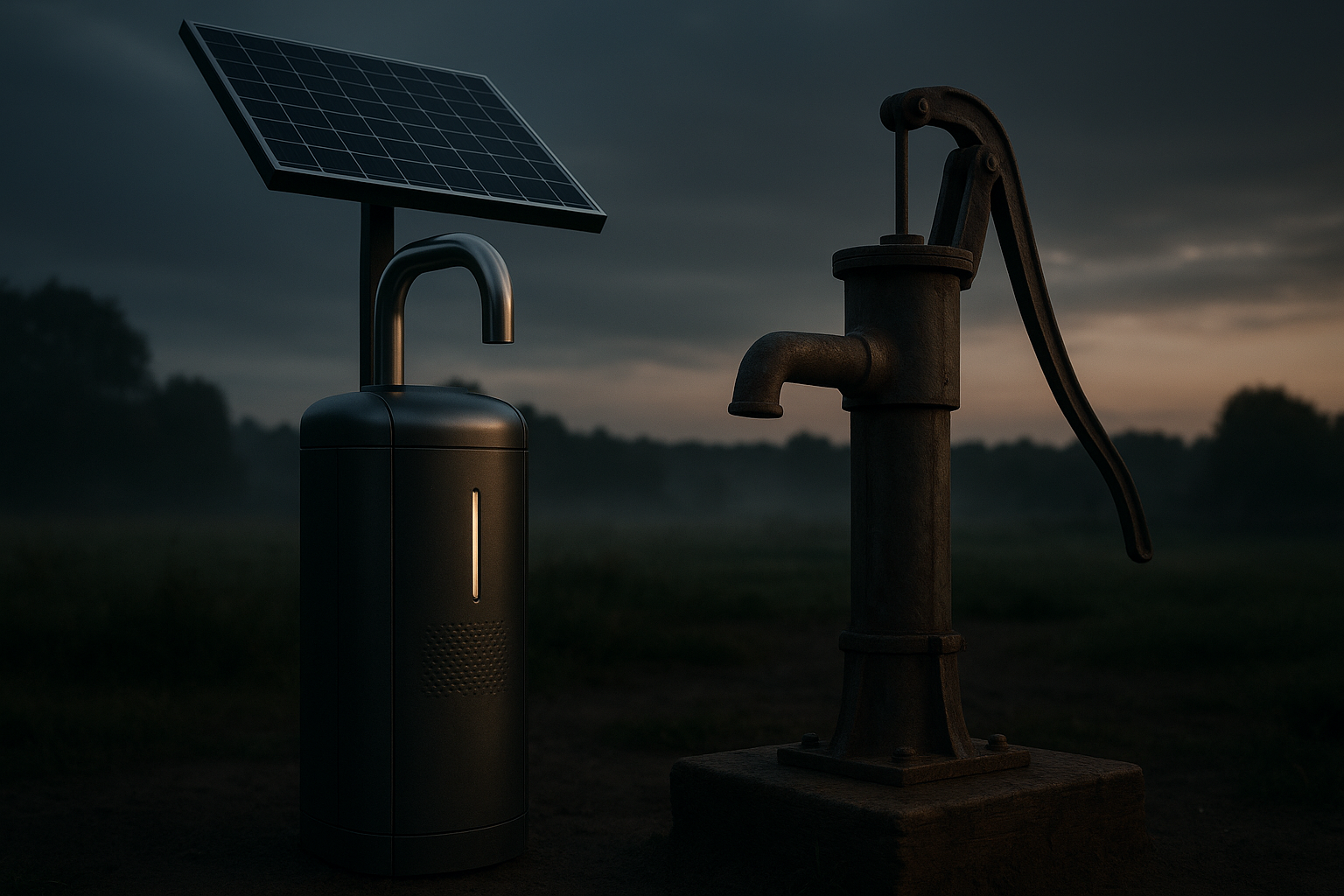
When living off-grid or preparing for emergencies, having a reliable water source is critical. Two main options stand out: solar-powered systems and manual hand pumps. Each has distinct benefits and limitations, making the choice dependent on your specific needs.
- Solar Systems: Use sunlight to pump water automatically. Ideal for high water demands, deeper wells, and sunny regions. They’re convenient but come with higher upfront costs and require sunlight to function.
- Manual Hand Pumps: Operate without electricity, relying on human effort. Perfect for emergencies, shallow wells, or remote locations. They’re affordable, reliable, and low-maintenance but require physical labor and offer lower water output.
Quick Comparison
| Feature | Solar-Powered Systems | Manual Hand Pumps |
|---|---|---|
| Initial Cost | High | Lower |
| Installation | Complex, requires expertise | Simple, mechanical setup |
| Water Output | High (sunlight-dependent) | Limited by physical effort |
| Power Source | Solar energy | Human effort |
| Maintenance | Periodic checks | Minimal |
| Weather Impact | Dependent on sunlight | Unaffected |
| Well Depth | Handles deep wells | Best for shallow wells |
| Daily Effort | Automated | Requires manual pumping |
For those with larger water needs or consistent sunlight, solar systems are a great option. Manual pumps are best for emergencies or low-demand scenarios. A hybrid system combining both can offer the most flexibility and reliability.
Ultimate Guide to Off Grid Water Systems
Solar-Powered Water Systems Explained
Solar-powered water systems use sunlight to pump water from wells, boreholes, or surface sources, making them a practical choice for off-grid locations. These systems convert solar energy into electricity, which powers a pump to draw and deliver water wherever it’s needed. Let’s dive into the key components and common uses of these systems.
Main Parts of Solar Water Systems
A solar water system relies on several components working together to ensure efficient water pumping:
-
Solar Panels: These panels, equipped with photovoltaic cells, capture sunlight and convert it into direct current (DC) electricity. They’re typically installed on structures positioned to maximize sun exposure throughout the day.
-
Water Pump: The pump does the heavy lifting, drawing water from the source and transferring it to storage or distribution points. Submersible pumps are designed for deep wells, capable of lifting water from depths of up to 700 feet. Surface pumps, on the other hand, are better suited for shallow sources like ponds or streams, handling depths of 10–20 feet [2–4].
-
Pump Controller and Sensors: The controller manages the power flow from the solar panels to the pump, protecting against issues like overvoltage, undervoltage, or dry running. Many systems also include sensors to monitor water levels in storage tanks and wells, preventing overflow and protecting the pump from damage.
-
Storage Tanks and Piping: These components store pumped water and deliver it to where it’s needed. Storage tanks are particularly useful for collecting water during sunny periods, ensuring a steady supply during nighttime or cloudy conditions.
Common Uses for Solar Systems
Solar-powered water systems are versatile and excel in off-grid or remote areas where reliable water access is crucial. Here are some common applications:
-
Well Water Extraction: Perfect for rural properties and homesteads, these systems efficiently pump water from deep wells without the need for fuel.
-
Livestock Watering: In remote pastures, solar systems can automatically fill water troughs throughout the day, ensuring animals always have access to fresh water.
-
Irrigation: Ideal for gardens, small farms, and food production areas, these systems can be timed to water crops during peak sunlight hours, aligning with plants’ watering needs.
Some cities, like Fresno and Bakersfield in California, have taken solar water systems to the next level by powering entire municipal water plants with solar energy. By integrating solar farms and battery storage, they’ve managed to cut power bills and maintain operations even during blackouts.
Solar System Benefits and Drawbacks
Solar-powered water systems offer a range of benefits, especially for those in off-grid locations. Once installed, they eliminate fuel costs, require minimal maintenance, and can operate for decades. They’re also scalable, serving everything from small households to large agricultural operations. Plus, they run automatically as long as there’s sufficient sunlight.
However, there are challenges to consider. These systems depend on sunny weather, so cloudy days, storms, or winter months can limit their effectiveness. Having a backup water storage solution is essential. Additionally, the upfront costs can be high due to the need for storage tanks, mounting hardware, and professional installation. The technical complexity of these systems can lead to potential failure points, and repairs often require specialized skills or hard-to-find parts. Weather-related damage can also disrupt operations until repairs are completed.
Adding a battery backup can help address some of these issues but comes with its own set of challenges. Batteries significantly increase the initial investment and require regular maintenance, including replacement every four years [2–4].
Manual Hand Pump Systems Explained
Manual hand pump systems offer a practical way to access groundwater without relying on electricity, making them ideal for off-grid locations. Whether used as a primary water source or a backup where solar systems aren't feasible, these pumps rely on human effort to draw water from wells. Their mechanical simplicity ensures consistent performance, unaffected by weather or power availability.
Pulling the handle draws water upward; releasing resets the pump for the next stroke.
Their straightforward design makes it easy to understand the different types of hand pumps available.
Different Types of Hand Pumps
Hand pumps are designed to accommodate various well depths and water needs. Choosing the right one depends on your specific situation.
-
Suction pumps: These are the simplest and most affordable option, suitable for shallow wells with a lift capacity of about 20 feet. They're great for surface water sources or very shallow wells but require consistent pumping to keep the water flowing.
-
Piston pumps: Designed for deeper wells, these pumps use a piston mechanism to move water upward. For example, the Simple Pump can handle depths up to 325 feet of static water level. After 4–5 priming strokes, it delivers around 20 ounces of water per stroke.
-
Deep well pumps: Built for challenging installations, these pumps can handle depths beyond 35 feet with no practical depth limit. Many include features like flywheels to reduce the physical effort needed for deep water extraction.
-
Lift pumps: These older-style pumps are effective for wells over 150 feet deep. They use a chain and cylinder system, requiring less physical effort, making them a good choice for families or shared use.
These designs ensure that manual pumps can meet a wide range of off-grid water needs.
Best Uses for Manual Pumps
Manual pumps shine in situations where reliability and independence from external power sources are essential. Small homesteads and rural properties often use them as a primary water source, pairing them with rainwater collection systems. This setup allows hand-pumped water to be reserved for drinking and cooking, while rainwater handles tasks like gardening and livestock care.
For off-grid families, manual pumps serve as dependable backups, especially during equipment failures or prolonged cloudy weather that might affect solar-powered systems. They’re also invaluable in remote locations like hunting cabins or seasonal properties, where access to electricity or fuel is limited. The Legacy Emergency Manual Well Pump is a popular and affordable option for these scenarios.
Hand Pump Benefits and Drawbacks
Manual hand pumps offer several advantages for off-grid water access. They operate independently of electricity, fuel, or weather conditions, making them incredibly reliable in emergencies. Modern systems are durable, requiring minimal maintenance - often just a check every five years.
The cost for a deep well manual pump system is typically a little over $2,000, excluding installation costs. For example, the Simple Pump Deep Well Hand Pump costs $2,200, while the shallow well version is priced at $1,040. Once installed, there are no ongoing energy expenses. Many modern systems also feature weep holes below the frost line to prevent freezing, and advanced sealing technologies, like the Teflon seals in Apocalypse Well Pumps, which can last indefinitely compared to rubber seals that typically last around 10 years.
However, manual pumps come with limitations. They require physical effort, which can be demanding for deep wells or high water needs. The amount of water you can pump depends on your strength and endurance, making them less suitable for large households or operations with significant daily water demands. Additionally, families accustomed to automated systems may need to adjust their routines, especially during times of increased water use.
| Pump Type | Depth Range | Best Applications | Cost | Features |
|---|---|---|---|---|
| Suction Pumps | Up to 20 feet | Shallow wells, surface water | Low-cost option | Simple design, requires steady pace |
| Piston Pumps | 25-325 feet | Most residential wells | $1,040-$2,200 | Reliable, minimal maintenance |
| Deep Well Pumps | 35+ feet | Very deep wells | Higher investment | Heavy-duty, mechanical advantage |
| Lift Pumps | 150+ feet | Extremely deep wells | Varies | Less physical effort required |
sbb-itb-1666494
Solar vs Hand Pump: Direct Comparison
Choosing between solar-powered systems and manual hand pumps comes down to understanding how each fits your specific needs. Both serve the same purpose - bringing water from your well to your home - but they operate in very different ways.
Here’s a quick side-by-side look at the key differences:
Feature Comparison Chart
| Feature | Solar-Powered Systems | Manual Hand Pumps |
|---|---|---|
| Initial Cost | Higher upfront costs for solar panels, controllers, and pumps | Lower initial investment |
| Installation Complexity | Requires professional setup with electrical expertise | Simpler mechanical installation |
| Daily Water Output | High volumes possible during sunny conditions | Limited by user effort and well depth |
| Physical Effort | Fully automated, no daily labor required | Requires manual pumping effort |
| Weather Dependency | Sunlight-dependent; output drops in low-light conditions | Works regardless of weather |
| Maintenance Needs | Periodic checks and occasional part replacements | Minimal upkeep with regular inspections |
| Power Source | Solar panels and batteries | Human power only |
| Reliability in Emergencies | May need backup during extended cloudy periods | Reliable if properly maintained |
| Operating Costs | Minimal ongoing costs after installation | Virtually no operating costs |
| Well Depth Capability | Can handle deeper wells with the right pump setup | Limited by mechanical design |
This breakdown highlights the strengths and trade-offs of each system, helping you decide based on factors like cost, ease of use, and reliability.
When Each System Works Best
Solar-powered systems are ideal for households with significant water needs, whether for everyday use, livestock, or full-time off-grid living. They’re particularly suited to areas with consistent sunlight, offering automated water delivery with little to no daily effort.
Manual hand pumps, on the other hand, shine in scenarios where reliability and independence are key. They’re perfect for emergency backups, seasonal cabins, or remote locations where simple repairs are a priority.
For the best of both worlds, a hybrid setup is worth considering. Use solar power for regular water supply while keeping a manual pump as a backup. This way, you’ll have automated convenience during normal conditions and a dependable manual option for cloudy days or technical hiccups.
How to Pick the Right Water System
Choosing the right off-grid water system is all about aligning it with your specific needs. Whether for daily use or emergencies, the right setup can become a reliable part of your life.
What to Think About Before Buying
Start by assessing how much water you use daily. If your needs include watering crops, caring for livestock, or serving a larger household, a solar-powered system might be the better choice due to its ability to handle higher water volumes. On the other hand, a manual pump is a simpler option for smaller-scale usage.
Keep in mind that manual pumps require physical effort, which might not be practical for everyone. In contrast, solar systems operate without manual labor but may need basic electrical troubleshooting skills.
Another key factor is sunlight availability. Solar systems thrive in sunny regions but can struggle during extended cloudy periods. If your location often experiences low sunlight, a manual pump might be a more dependable option.
Well depth also plays a role. Manual pumps work best with shallow wells, whereas solar systems can handle deeper sources. However, deeper wells may require more complex or costly adjustments for solar setups.
Lastly, think about your budget. Manual pumps are generally less expensive upfront, while solar systems come with a higher initial price tag. That said, the convenience and capacity of solar systems can make them a worthwhile investment over time.
Best Options for Different Situations
Different scenarios demand different solutions:
- Emergencies: Manual pumps are a go-to option for reliable water access during power outages or system failures. Their simple design ensures functionality without electricity.
- Seasonal Cabins or Camps: Manual pumps shine in settings with infrequent use. They avoid issues like battery wear or weather-related damage, making them a durable choice for remote locations.
- Full-Time Homesteads: For daily water needs, solar systems offer automation and higher capacity. Whether for households or small farms, the convenience of a solar system often justifies the upfront cost.
In areas where repair services are scarce, consider maintenance ease. Manual pumps rely on straightforward mechanical parts that are easier to fix locally, while solar systems may require specialized components and expertise.
For added flexibility, a hybrid approach can be ideal. Combining a solar system for regular use with a manual pump as a backup ensures reliability, even if it means a higher initial investment.
AgentXSurvival Water Solutions

Once you’ve evaluated your needs, AgentXSurvival simplifies the process with its range of off-grid water solutions. Their curated directory features both manual and solar-powered systems, along with resources to help you build and maintain an effective setup.
If you’re into DIY projects, the Aqua Tower DIY water generator is a great option. It provides step-by-step instructions for creating an off-grid water system that doesn’t rely on traditional electricity. Additionally, their platform offers valuable tips on water filters, storage, and conservation, helping you achieve a comprehensive water independence plan.
For solar system users, AgentXSurvival provides guidance on protecting your setup during electrical disruptions, such as EMP events. Their survival guides and manuals also cover water conservation, storage strategies, and backup planning, ensuring your system stays functional under any circumstances.
Conclusion
Deciding between solar-powered water systems and manual hand pumps ultimately depends on your specific needs and priorities. Solar systems provide automated water delivery with higher capacity, but they rely on consistent sunlight and come with a higher upfront cost. Manual pumps, on the other hand, are reliable regardless of the weather, require minimal maintenance, and have lower installation expenses. Their simple mechanical design means fewer breakdowns, and any necessary repairs often involve easy-to-find parts.
When making your decision, think about factors like your water usage, budget, physical requirements, and local conditions such as well depth and sunlight availability. For those in sunny regions with greater water demands, solar systems might be a worthwhile investment. Meanwhile, individuals focused on emergency preparedness or working within tighter budgets may appreciate the reliability and simplicity of hand pumps. The right choice will always depend on your unique situation and water needs.
Having a reliable water source is essential for off-grid living. Whether you go with solar-powered systems, manual pumps, or even a combination of the two, ensuring consistent access to water is key to achieving independence.
AgentXSurvival offers tools and guidance to help you make the best choice. From DIY projects like the Aqua Tower system to strategies for safeguarding your setup during emergencies, their resources can support you in achieving water self-sufficiency. Evaluate your needs and explore the options available to build a water system that works for you.
FAQs
Choosing between a solar-powered water system and a manual hand pump depends on what suits your situation best.
Solar-powered systems work well in places with steady sunlight. They’re automated, need little maintenance, and can save money over time. That said, they come with higher upfront costs and depend on sunlight, which means they’re less effective at night or on cloudy days.
Manual hand pumps, on the other hand, are budget-friendly to install, simple to operate, and perfect for shallow wells. They’re dependable in any weather but require physical effort and might not keep up with large water demands. To decide, think about your water needs, budget, and whether you’d rather have an automated setup or a manual, hands-on option for your off-grid water system.
Solar-powered water systems often encounter a few maintenance hurdles, such as dust and debris collecting on solar panels, inverter issues, gradual panel wear, and weather-related challenges like freezing temperatures or heavy shading. Keeping up with regular maintenance is essential to ensure these systems work at their best.
To tackle these challenges, start with routine inspections and clean the panels regularly to maximize sunlight absorption. Keep an eye on the system’s performance to detect and address any problems early. Replace components like inverters or batteries when they show signs of failure. If you're in a colder region, insulating exposed pipes can help prevent freezing during harsh winters. Taking these steps not only prolongs the system's life but also guarantees dependable performance, no matter the weather conditions across the U.S.
Yes, pairing a solar-powered pump with a manual hand pump creates a more dependable and flexible off-grid water system. This combination ensures you’ll have access to water even on cloudy days, during power outages, or if the solar system experiences any issues.
To make this work, install a solar pump system equipped with an inverter and a control unit to optimize energy use. Then, add a manual hand pump nearby as a backup option for times when manual operation is necessary. These two systems function independently, ensuring you always have access to water, no matter the circumstances. This setup is particularly useful for emergency situations or remote living, where consistent water availability is essential.