
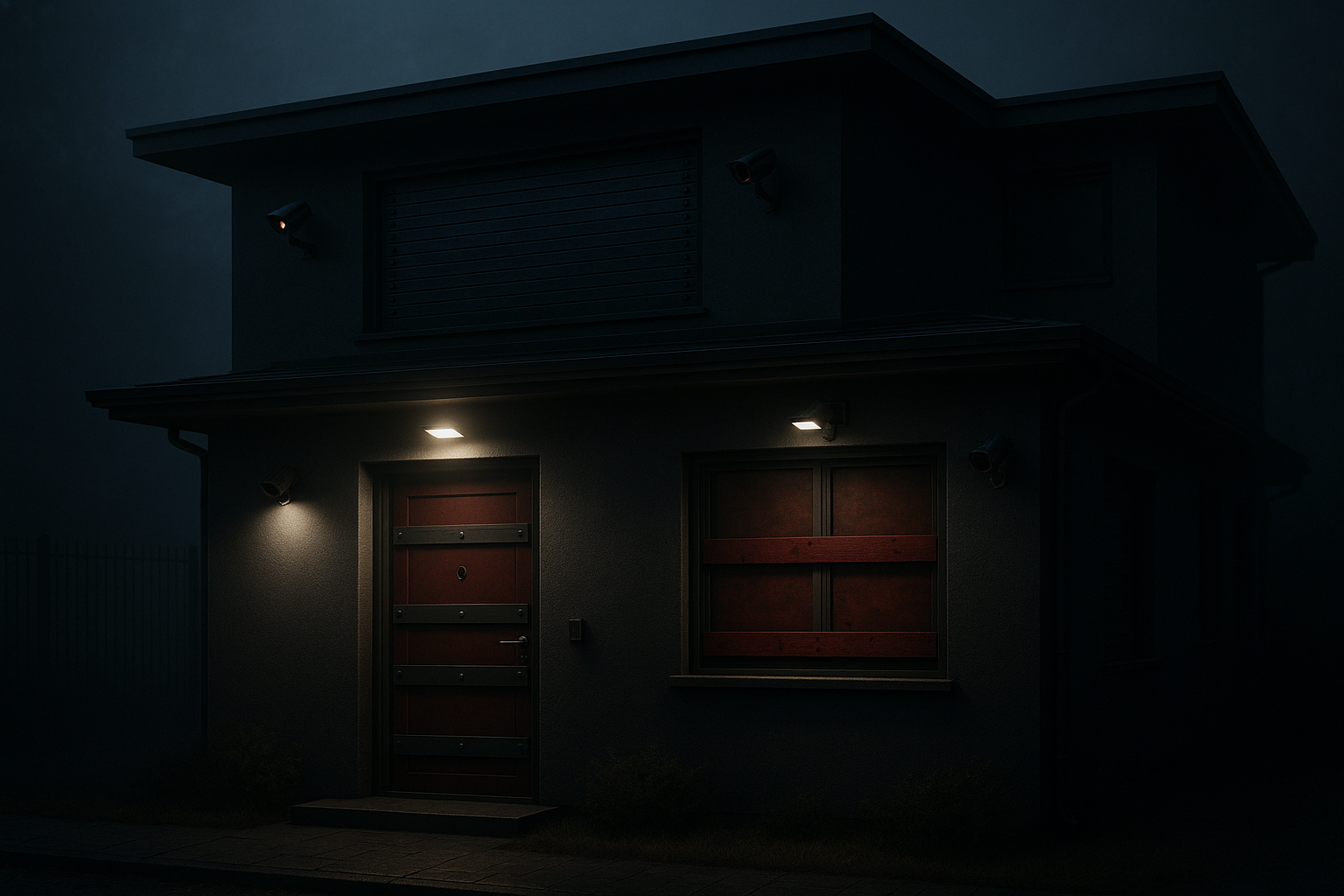
When civil unrest occurs, your home becomes your primary defense against potential threats like break-ins or vandalism. Strengthening your home’s security is crucial, especially when law enforcement may be stretched thin. Here's a quick guide to help you prepare:
- Secure Entry Points: Reinforce doors, windows, and garages with strong locks, security bars, and shatter-resistant film.
- Strengthen Your Perimeter: Inspect fences, gates, and outdoor lighting for vulnerabilities. Trim vegetation to eliminate hiding spots.
- Install Security Systems: Use cameras, alarms, and motion-activated lights to deter intruders and monitor activity.
- Create a Safe Room: Set up a secure, windowless space with supplies for at least 72 hours, including water, food, first aid, and backup power.
- Plan for Emergencies: Establish family communication plans, meeting points, and stockpile essentials like cash, documents, and self-defense tools.
Fortify Your Home: Surviving Civil Unrest
Finding Weak Points in Your Home
Before you can improve your home’s security, you need to pinpoint every potential vulnerability that an intruder might exploit.
Did you know that 80% of break-ins happen through main entry doors? Yet, many weak spots go unnoticed until it’s too late. Conducting a thorough security check now can help you identify and address these gaps before they become a problem. Start by focusing on your home’s primary entry points.
Checking Doors, Windows, and Garages
Take a close look at every door, window, and garage for signs of wear or damage that could make forced entry easier.
Pay special attention to your front and back doors since they’re the most common targets. Make sure the door frames are solid wood or metal - hollow doors are far easier to breach. Test the locks; any movement could mean the strike plate or frame isn’t secure enough.
Sliding glass doors are another weak point. Older models can often be lifted out of their tracks or have locks that are easy to bypass. Adding a security bar or a sturdy dowel in the track can make a big difference.
Don’t forget about your garage. Check that all doors, including any connecting entryways, are secure. Test the garage door opener by trying to lift the door manually when it’s closed. If it moves more than a couple of inches, the locking mechanism might need adjustment.
Windows are another area where intruders can gain access. Look for weak latches, cracked glass, or warped frames. Ground-level windows and those hidden from view are especially appealing to burglars. Also, check if window screens can be easily removed from the outside, as this could provide access to the latches.
Examining Your Property's Outer Edges
Your property’s perimeter acts as the first line of defense. Walk around the entire boundary of your yard, looking for potential weaknesses or hiding spots.
Inspect fences and gates for loose boards, broken latches, or damage caused by weather or age. Even small gaps at the base - sometimes caused by animals - can serve as entry points for someone determined to get in. Make sure gate hinges are sturdy and locks work properly.
Look for areas with limited visibility from your house or the street. Overgrown bushes, tall fences, and certain architectural features can create blind spots where intruders could hide. Thick vegetation near doors or windows can also provide cover during a break-in attempt.
Lighting is a key deterrent for criminal activity. Walk your property at night to spot dark areas where someone could approach unnoticed. Check for burned-out bulbs, blocked fixtures, or places where additional lighting might be needed.
Also, consider how your neighbors’ properties might affect your security. Vacant lots, abandoned buildings, or homes that appear unoccupied can act as staging areas for criminal activity. Open sight lines into your yard could also make surveillance easier for potential intruders.
Researching Local Crime and Unrest Patterns
Knowing the crime trends in your area can help you prepare for specific threats. Beyond physical inspections, understanding these patterns can refine your security strategy.
Check local police crime reports and statistics to identify high-risk times and areas. For context, over 800,000 burglaries occurred across the United States in 2023, with an average loss of more than $97,000 per incident.
"Crime statistics can be a tool in helping criminal justice professionals anticipate increased risk of crime. This can be followed up by law enforcement intervention to prevent the predicted crimes from occurring. The predictive policing data can help focus on a specific area and allow police resources to be used more effectively." – Walden University
Notice timing patterns in the data. Some neighborhoods see more break-ins during specific hours, seasons, or events. For example, if most burglaries in your area happen during weekday afternoons when people are at work, you might want to focus on visible deterrents like cameras or alarm signs.
Social media and neighborhood apps like Nextdoor can also be valuable. They often provide real-time updates on suspicious activity or break-ins that might not appear in official reports yet. These insights can help you stay one step ahead of potential intruders.
In 2023, 77% of Americans believed crime was rising nationwide, and 63% considered overall crime rates to be "extremely" or "very serious" concerns. This growing unease highlights the importance of addressing even small vulnerabilities.
"Burglars are opportunistic, seeking homes that appear easy to get in and out of without attracting attention." – Brinks Home
Strengthening Windows Against Break-ins
Securing your windows is a key step in protecting your home. With about 30% of break-ins happening through unsecured windows, it's clear that enhancing window security is a must when aiming for full home protection. Reinforcing your windows works hand-in-hand with other security measures to create a stronger defense.
Making Windows Harder to Break
Standard glass can be broken quickly, making it an easy target for intruders. One effective solution is applying security film to your windows. This transparent film adheres to the glass, keeping shattered pieces in place and making it much harder for intruders to create a large enough opening to enter.
Creating Physical Barriers Around Your Property
Physical barriers play a key role in delaying intruders and discouraging unwanted entry. These measures build on basic security improvements and strengthen your overall defense plan.
Building or Improving Fences and Gates
A solid fence can act as a strong deterrent by blocking visibility and restricting access. If you already have a fence, take the time to inspect it for damage - look for broken boards, loose posts, or gaps that could compromise security. Make necessary repairs or reinforce weak spots to ensure it remains effective.
Gates, however, tend to be the weakest link in any fence line. To enhance their security, invest in durable hardware, like heavy-duty hinges and sturdy locks. Features such as self-closing mechanisms can help ensure gates stay shut, while internal reinforcements can make them harder to force open. For chain-link fences, consider upgrades that improve both privacy and protection, such as privacy slats or additional reinforcements.
Adding Lights and Motion Detectors
Technology can complement physical barriers by further deterring intruders.
Motion-activated lights are an affordable and effective way to boost security. Strategically place them near key entry points - like doors, garages, and ground-floor windows - to discourage suspicious activity. Installing lights at higher positions reduces the risk of tampering, and energy-efficient options can help keep electricity costs in check.
Movement sensors, whether for detecting people or vehicles, can provide an early warning by triggering lights or alarms. Look for systems with adjustable sensitivity and timers to reduce false alarms while still keeping you informed. For added reliability, choose models with battery backups or solar power to ensure continuous operation.
Using Plants and Yard Design for Protection
Smart landscaping can enhance security while maintaining a welcoming appearance. Planting thorny shrubs near vulnerable spots, such as windows, creates a natural barrier that’s both functional and visually appealing. Select plants that deter access while blending with your yard’s overall design, and ensure they don’t block critical sight lines.
Gravel pathways can also serve as a subtle security measure by amplifying the sound of footsteps, alerting you to movement around your property. Designing your yard with open views and clear sight lines helps maintain natural surveillance, giving you better awareness of your surroundings.
sbb-itb-1666494
Setting Up Cameras and Alarm Systems
Installing surveillance systems is a smart way to protect your property. They not only discourage potential intruders but also help document any incidents. Here’s how to approach setting up cameras and alarms for a well-rounded security setup.
Choosing and Installing Security Cameras
When selecting security cameras, go for models that offer high-definition video quality and include features like night vision, motion detection, and remote viewing. Cameras with 24/7 monitoring and secure cloud storage ensure you can access footage anytime, even if the device is tampered with or damaged. Position them strategically around entry points, blind spots, and any areas that require extra surveillance.
Adding Warning Signs and Alarm Systems
Visible security signs, like “CCTV in Use” or “Property Under Surveillance,” can discourage intruders before they even step onto your property. Pair this with an alarm system that’s connected to a professional monitoring service. If triggered, these systems can immediately notify law enforcement, providing an extra layer of protection.
Setting Up Emergency Plans and Safe Rooms
Strengthen your physical defenses by pairing them with solid emergency plans and a secure retreat. When civil unrest intensifies, having a safe room and clear emergency protocols can mean the difference between staying safe and being at risk. While surveillance systems provide early warnings, it's essential to have backup plans in place for rapidly changing situations.
Building a Safe Room in Your Home
Choose a windowless room with reinforced walls for your safe room. Ideal locations include interior closets, basements, or rooms connected to your home's structural core. Reinforce the door with a solid core or steel door, and secure it with multiple deadbolts. If there are windows, equip them with security film or plywood covers that can be quickly deployed. To ensure communication during emergencies, consider adding a landline phone or two-way radio, as cell networks often become unreliable during crises.
Stock your safe room with enough supplies to last at least 72 hours. This includes 1 gallon of water per person per day, nonperishable food, a battery-powered radio, flashlights, first aid supplies, essential medications, and a backup power source. Store these items in waterproof containers, and rotate perishable supplies every six months to keep them fresh.
For power needs, install a battery backup system to keep essential electronics running. Small portable power stations can charge phones and power LED lights for days. Ensure the room has proper ventilation - use battery-powered fans if the space is sealed. Avoid using candles or gas-powered devices that consume oxygen.
Once your safe room is ready, establish clear communication protocols to keep your family coordinated during emergencies.
Creating Family Emergency Communication Plans
To ensure your family's safety, set up reliable communication strategies alongside your other security measures. Identify multiple meeting points: one close to home and another farther away, outside your immediate neighborhood. If local roads are blocked or unsafe, having alternative rally points ensures family members can reunite even if primary routes are inaccessible.
Designate an out-of-state contact person to act as a central point for relaying information among separated family members. During emergencies, local phone lines often become overwhelmed, but long-distance calls may still go through. Make sure everyone memorizes this person’s phone number and address.
Establish check-in schedules with regular times for family members to communicate. This reduces strain on overloaded networks and ensures everyone knows when to expect updates.
Create code words to communicate safely about different threat levels or situations. For example, a phrase like "visiting grandma" might signal it's safe to return home, while "going fishing" could indicate staying away. These codes are especially useful if phone lines are being monitored or compromised.
Gathering Emergency Supplies and Equipment
Beyond your safe room supplies, aim to keep 30 days’ worth of food and water stored. Focus on calorie-dense, shelf-stable foods such as rice, beans, canned proteins, and peanut butter. Store water in food-grade containers, and include water purification tablets or a gravity-fed filter system for long-term use.
Prepare a complete first aid kit to handle common injuries. Include items like prescription medications, antibiotics (if available), pain relievers, and antiseptic supplies. It’s also a good idea for family members to take a basic first aid course to ensure multiple people can provide medical care if needed.
Equip yourself with legal self-defense tools and get proper training. Options might include pepper spray, tactical flashlights, or other approved defensive items.
For lighting and power, stock up on battery-powered lanterns, solar chargers, hand-crank radios, and extra batteries in various sizes. Rechargeable options with solar panels are especially useful. If you plan to use portable generators, store fuel safely and remember to never operate them indoors.
Keep a cash reserve in small denominations, as ATMs and card readers may be out of service during widespread unrest. Additionally, store important documents like identification, insurance papers, bank account details, and property deeds in waterproof containers. Having physical copies ensures access to critical information even if digital systems fail.
Conclusion: Protecting Your Home and Family
Bringing everything together, it's time to solidify your home's defenses. By combining physical barriers, technology, and emergency planning, you can create a safer environment for your family and reduce potential risks.
Start with the basics: reinforce your doors and windows using sturdy locks and address any weak points you’ve identified. Adding layers of protection like better fencing, well-placed lighting, and motion detectors can act as deterrents and provide early warnings. Modern security systems, including cameras and alarms, offer real-time monitoring and can be crucial for collecting evidence if needed. Don't forget to include backup power sources to keep these systems running during outages.
Take things a step further by setting up a safe room stocked with emergency supplies. This isn't just useful during civil unrest - it can be a lifesaver during natural disasters, blackouts, or other emergencies. Having these measures in place ensures your family is prepared for a variety of scenarios.
Start today by addressing the most critical vulnerabilities - like doors and windows - before resources become harder to find. You can gradually enhance your home's security over time, building a system that fits your needs and budget.
The goal here isn’t to turn your home into an impenetrable fortress. Instead, focus on making it a less appealing target. Many threats during times of unrest are opportunistic, and taking proactive steps can significantly reduce the likelihood of your home being singled out. At the same time, you'll be equipping your family with the tools and plans needed to stay safe.
Preparedness puts you in control. By securing your home and establishing clear emergency plans, you’re investing in peace of mind and safety for your family, no matter what challenges come your way.
FAQs
When preparing your home for potential civil unrest, securing doors and windows is a critical step. Start by reinforcing vulnerable entry points. For windows, consider installing impact-resistant glass or applying security film. These options make it much harder for glass to shatter. You can also add security bars, steel mesh, or metal grates to create a solid physical barrier that deters intruders.
For doors, focus on strengthening the frame. Use longer screws in the hinges and strike plate to make them more resistant to force. Adding a door brace or a reinforcement lock can provide an extra layer of protection. These straightforward upgrades can make a big difference in securing your home and giving you greater confidence during uncertain times.
Start by thoroughly examining your property’s perimeter to pinpoint potential weak spots. These could include areas with poor lighting, gaps in fences, or outdated locks. Pay close attention to doors, windows, and gates - common entry points for intruders. Check for any wear and tear that might make these areas easier to break into.
To shore up these vulnerabilities, consider strengthening entry points with solid core doors, deadbolt locks, and applying security film to windows. Adding motion-activated lights can brighten dark areas, making them less appealing to trespassers. Installing security cameras provides an extra layer of monitoring. You can also create physical barriers like fences, dense hedges, or gravel paths that make noise when stepped on, discouraging unwanted visitors. Regularly inspect and maintain these security measures to keep your property safe.
To ensure your family’s safety during emergencies, your safe room should be equipped with supplies that meet basic needs. Start with the essentials: bottled water (at least 1 gallon per person per day), non-perishable food, a flashlight with extra batteries, a first aid kit, necessary medications, and a battery-powered or NOAA weather radio to stay informed.
For added comfort, consider including blankets, cleaning rags, and small items like games or books to help ease stress during extended stays. Preparing these supplies ahead of time gives you peace of mind and a secure environment for your family when it matters most.