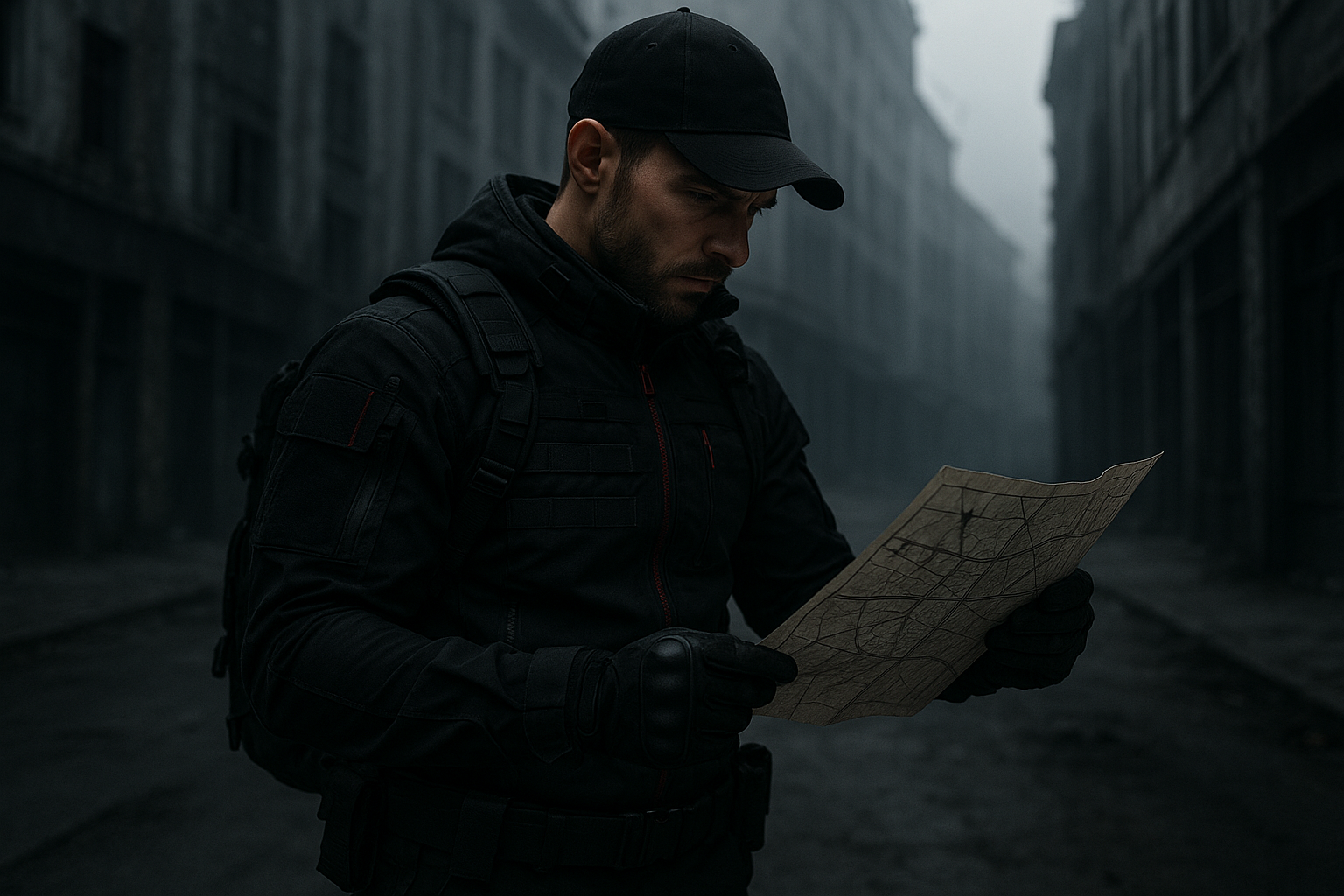
When disaster hits a city, knowing how to navigate safely can save your life. Urban terrain mapping focuses on creating detailed, physical maps to help you identify safe zones, avoid hazards, and plan escape routes when technology fails. Smartphones and GPS often become unreliable during emergencies like blackouts, floods, or civil unrest. A well-prepared map, combined with basic navigation tools like a compass, can guide you through chaotic urban environments.
Key Takeaways:
- Use durable, waterproof maps covering a 3–10 mile radius of your area.
- Mark safe zones (e.g., shelters, police stations) and avoid high-risk areas (e.g., flood zones, industrial sites).
- Plan multiple evacuation routes, including side streets and unconventional paths like parks or utility corridors.
- Highlight resources like water sources, medical facilities, and food supplies.
- Regularly update your map and practice navigating without GPS.
Urban mapping is about preparation, not just survival. With the right tools and practice, you can navigate emergencies confidently and avoid common pitfalls like blocked roads or overcrowded areas.
Urban Planning for SHTF
Tools and Resources for Urban Mapping
Preparing effective urban survival maps means gathering the right mix of physical materials, dependable navigation tools, and durable recording supplies. In emergencies where electronic systems might fail, these analog resources become indispensable for navigating through challenging urban landscapes.
Maps and Reference Materials
Physical maps form the backbone of any urban survival plan. City maps provide essential details like streets, building layouts, and neighborhood boundaries, which are crucial for identifying safe zones and planning escape routes. It’s smart to have maps that cover your home, workplace, and any potential bug-out locations, ensuring that local details are well-documented.
State highway maps offer a broader perspective, showing major roads and alternative routes for evacuation. For urban escape planning, a city map with a 20-mile radius works well, while a smaller map covering a 3- to 10-mile radius is more practical for daily navigation, whether on foot or by bike.
Topographic maps add another layer of detail by highlighting terrain features like valleys, ridges, and elevation changes. These maps are particularly useful in urban and surrounding areas, as they help you spot natural travel paths or areas prone to flooding. The contour lines on these maps make it easier to visualize the terrain’s shape, even on a flat surface.
For survival purposes, maps should be tough - waterproof and tear-resistant to withstand frequent handling and harsh environments. The most effective maps combine multiple types of information, such as roads, satellite imagery, and terrain details, while still being compact enough to fit into a bug-out bag.
Navigation Tools
When GPS systems fail, a compass with adjustable declination settings becomes a must-have tool. These settings align magnetic north with true north, ensuring accurate navigation.
While backup GPS units can be helpful, they shouldn’t be your primary tool due to battery limitations and potential reliability issues. Instead, rely on a combination of map, compass, and GPS, with analog tools taking priority for their dependability.
Rulers and protractors are handy for measuring distances and angles on maps, enabling precise route planning and travel time estimates. A simple piece of string can also come in handy for measuring curved paths along winding roads or irregular terrains. Understanding map scales is key - on a 1:12,000 scale map, for instance, 1 inch represents 12,000 inches in real life.
Marking and Recording Supplies
Waterproof markers are essential for customizing your maps with real-time information, such as safe zones, escape routes, hazards, or resource locations. These personalized annotations make your maps more practical and tailored to your needs.
Field notebooks are another vital tool. They allow you to jot down observations, route details, and updates about changing conditions. Over time, these notes help you build a clearer picture of your urban environment, including new hazards or resources.
To protect your maps and notes from the elements, use map cases. These cases shield your materials from rain, dirt, and wear and tear, ensuring that critical information remains readable and accessible when you need it most.
Regularly practicing with these tools in your local area is key to becoming familiar with landmarks, alternate routes, and potential obstacles. By combining high-quality materials with hands-on experience, you’ll create a dependable navigation system that works even when modern technology is unavailable. Mastering these tools makes mapping and survival planning a seamless part of your urban preparedness strategy.
How to Create and Mark Urban Survival Maps
This guide walks you through customizing a city map for urban survival, helping you prepare for emergencies by identifying safe zones, planning escape routes, and marking critical resources. A well-prepared map can offer multiple options for safety and escape when every second counts.
Start with a detailed city map that covers a 3–10 mile radius around key locations like your home, workplace, and any potential bug-out spots. Make multiple copies for backup. Use non-permanent markers during the planning phase, then finalize your map with waterproof ink to ensure durability.
Finding Safe Zones
Safe zones are essential for regrouping, resupplying, or waiting out dangerous situations. To identify these locations, research emergency shelters, community centers, and secure buildings using local government resources and online directories.
Public schools often serve as emergency shelters and typically have backup generators, large spaces, and established protocols. Churches and community centers with similar setups can also be reliable options. Police stations and fire departments provide added security and resources, but they might become overcrowded during large-scale emergencies.
Mark these safe zones on your map with distinct colors and simple symbols. Avoid marking locations prone to crowding or chaos, like shopping malls or sports stadiums. Research each safe zone’s operating hours, access requirements, and specific conditions. For example, some shelters only open during particular disasters or may require proof of residency. Include these details as numbered notes on your map.
Once safe zones are identified, focus on planning multiple escape routes to ensure flexibility.
Planning Escape Routes
When planning escape routes, think beyond the obvious. Avoid main roads and highways, as they’re likely to become jammed during emergencies. Instead, consider side streets, alleys, and alternative paths. Plan three routes to each destination: one primary route and two backups. Use topographic maps to identify terrain features like valleys or ridges, which can offer cover or ease of movement, even in urban settings.
Look for less conventional paths, such as parks, utility corridors, or railroad tracks, which may remain accessible when roads are blocked. Use different colors to mark your routes - blue for primary paths, yellow for secondary options, and orange for emergency-only routes. Include distance estimates and travel times for walking or cycling in case vehicles aren’t an option.
Marking Resources and Hazards
A complete survival map goes beyond safe zones and routes - it also highlights resources and hazards. Use a clear color-coding system: blue for water, yellow for medical facilities, and red for hazards. This makes it easier to make quick decisions during high-pressure moments.
For water, go beyond grocery stores and restaurants. Mark natural sources like rivers, public fountains, or buildings with water access, such as gyms or community centers. Keep in mind that water from natural sources will likely need purification.
When marking food resources, include grocery stores, pharmacies, restaurants, and community gardens. Gas stations and convenience stores can also be valuable, as they often remain operational longer during crises.
Medical facilities are critical. Mark hospitals, urgent care centers, pharmacies, and even veterinary clinics, which might have useful supplies. Include notes about their hours and any special requirements for access.
Equally important is identifying hazards. Use local crime data to mark high-crime areas. Highlight industrial sites that could pose chemical risks, flood-prone areas, and traffic-heavy zones that might become dangerous during evacuations. Bridges, overpasses, chemical plants, gas stations, power substations, and cell towers should also be noted as potential risks during disasters.
Keeping Your Map Updated
Urban areas are constantly changing, so it’s important to regularly update your map. New construction, business closures, and infrastructure changes can all impact your plans. Take monthly walks or drives to verify the accuracy of your map and make adjustments as needed.
Your finished map should be more than just a collection of streets and buildings - it should serve as a guide to survival. Every mark and symbol represents a choice that could make a difference in an emergency, making the effort you put into creating and maintaining it a key part of your preparedness.
sbb-itb-1666494
Using Your Map in Survival Scenarios
A map is only as useful as your ability to read and apply it when it matters most. The real test comes during emergencies, where your skills in recognizing terrain, adjusting routes on the fly, and practicing regularly can make all the difference.
Terrain Association and Landmarks
When GPS fails or street signs are missing, terrain association becomes essential. This skill involves using physical features - like rivers, bridges, parks, or unique buildings - to pinpoint your location on a map. In cities, landmarks such as hospitals (with their distinct structures), water towers, or major intersections can be reliable guides. To improve accuracy, always cross-check multiple landmarks instead of relying on just one. Practicing this under different conditions, like at night or during bad weather, can sharpen your ability to stay oriented in high-pressure situations. This foundational skill is key to adapting your routes effectively.
Route Adaptation
Emergencies rarely go as planned, and obstacles can appear without warning. Flexibility and awareness are critical. For instance, FEMA reports that over 60% of urban evacuations during disasters are delayed due to blocked primary routes, highlighting the importance of alternative plans.
If your main route is blocked by debris, crowds, or barricades, your map becomes your lifeline. Use it to identify side streets, alleys, parks, or other less obvious paths to avoid danger zones. Sometimes open spaces like school grounds or fields can provide quicker, safer passage.
A real-world example comes from Hurricane Ida’s 2021 impact on New Orleans. Residents who had marked alternative evacuation routes on physical maps managed to avoid flooded highways and reached safety two hours faster than those relying on GPS, which failed during widespread power outages. Practicing these skills ahead of time is what enables quick, decisive action when it counts.
Practicing Navigation Skills
Once you’ve learned to adapt routes, the next step is building confidence through practice. Despite its importance, a 2022 Red Cross survey revealed that only 17% of Americans have ever practiced an evacuation route in their area. Regular practice helps you develop the muscle memory needed to navigate effectively under stress.
Start small: plan a route from your home to a safe zone using only a map and compass - no GPS allowed. As you go, take note of any surprises, like locked gates or unexpected detours, and time how long the journey takes. This helps you identify weak points in your plan.
To make your practice sessions more realistic, vary the conditions. Test routes at night, during bad weather, or while carrying a heavy bag to simulate the physical challenges you might face in a real emergency. Walking three miles on flat pavement feels very different from tackling the same distance on hilly terrain with gear in tow.
"When it hits the fan, you won't need opinions. You'll need strategy." - AgentXSurvival
Using AgentXSurvival Resources in Your Plan
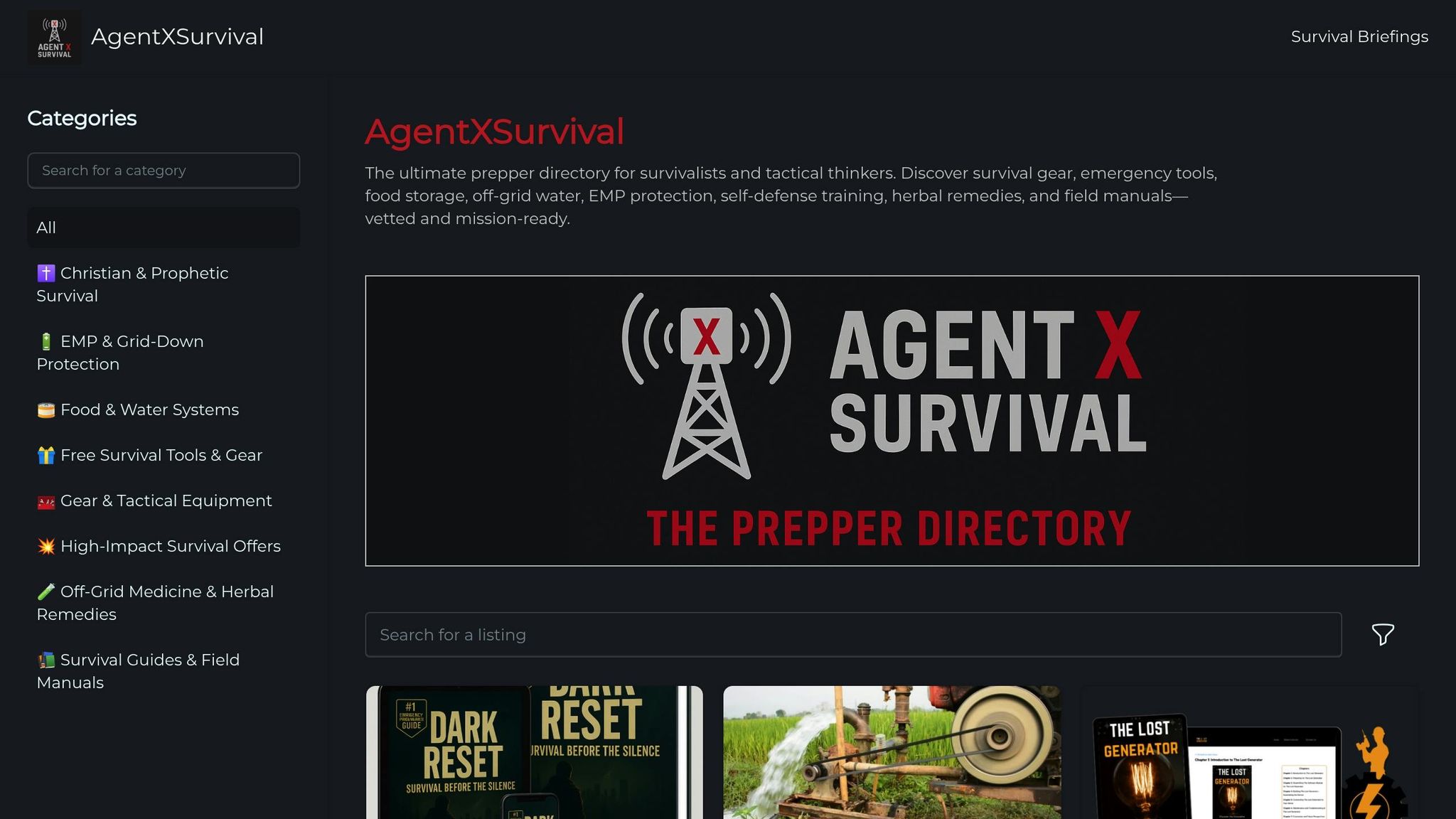
Planning for urban survival requires more than just maps - it demands reliable tools, practical knowledge, and strategies for long-term self-sufficiency when the usual infrastructure collapses. AgentXSurvival acts as a one-stop resource for survivalists, supplying carefully selected gear and expert guidance tailored to urban challenges. By combining dependable equipment with detailed mapping strategies, you can significantly enhance your urban survival readiness.
Recommended Gear and Tools
The right gear can make the difference between being lost and navigating safely in an emergency. AgentXSurvival offers tactical tools designed to ensure you stay prepared, even in environments where resources are scarce.
- Navigation Essentials: Tactical backpacks are perfect for storing maps, compasses, and marking tools while keeping everything organized and durable. Multi-tools add versatility, offering a range of functions that are invaluable during urban mapping and emergencies.
- Water Filtration: Access to clean water is critical in prolonged crises. AgentXSurvival provides portable water filtration systems, including pump filters and purification tablets, capable of turning questionable urban water sources into safe drinking water.
- Food Supplies: Emergency food kits with extended shelf lives offer reliable nutrition during long-term situations. They’re easy to deploy and can be stored strategically at multiple safe zones across your mapped areas.
- Lighting and First Aid: Flashlights ensure visibility during nighttime navigation, while first aid kits provide essential medical care for injuries encountered along your routes.
Prices for basic emergency kits start at around $50–$100, while more advanced options, such as tactical backpacks and high-end water filtration systems, range from $80–$300. Long-term food storage solutions vary widely, costing anywhere from $200 to over $1,000, depending on the duration and contents.
Survival Guides and Manuals
AgentXSurvival's guides and manuals offer practical, step-by-step instructions for urban survival, focusing on how to map safe zones, plan escape routes, and identify hazards in city environments.
These guides stand out by including real-world case studies. For instance, they detail how portable water filters have been used during water main breaks, how emergency radios have provided communication during blackouts, and how pre-marked maps have guided people through blocked streets during hurricanes.
The manuals also provide templates for annotating maps, helping you mark critical areas like chemical plants, flood zones, and high-crime neighborhoods. They stress the importance of keeping maps updated as conditions evolve, ensuring your survival plan stays relevant.
One notable resource is Dark Reset – Faith-Based Survival Blueprint, which explores the challenges of societal breakdowns. It offers insights into how urban survival maps need to adapt to new threats, shifting safe zones, and altered routes in an unpredictable environment.
Long-Term Preparedness Solutions
Urban survival isn’t just about getting through the initial crisis - it’s about staying self-reliant when city services are no longer available. AgentXSurvival provides solutions for long-term survival, ensuring you’re prepared for extended disruptions.
- Power Solutions: Solar-powered generators and EMP protection devices allow you to keep electronic navigation tools operational during prolonged blackouts. The Lost Generator – DIY Thermal Power guide offers instructions for building a thermal energy generator to power GPS devices, digital maps, and communication tools off-grid.
- Sustainable Living: Off-grid cooking systems and herbal remedy kits support survival in safe zones for weeks or even months. These tools are especially valuable if you need to shelter in place while waiting for city infrastructure to recover.
- EMP Preparedness: Electromagnetic pulse events can disable electronic devices, making analog maps and manual navigation skills crucial. AgentXSurvival emphasizes the importance of layering physical maps with digital backups, along with regular practice to maintain readiness.
Conclusion: The Importance of Urban Mapping for Survival
When city infrastructure crumbles and digital navigation tools fail, urban terrain mapping becomes your lifeline. By breaking down the complexities of cityscapes into clear, actionable plans, you can confidently navigate emergencies and stay one step ahead of potential dangers.
The process starts with physical maps, which remain dependable long after GPS systems go offline. Personalizing these maps by marking safe zones, escape routes, resources, and hazards transforms them into a practical survival tool. Pair these maps with essential navigation gear - like a compass, markers, and notebooks - and you’re equipped to create and use them effectively when it matters most. This preparation lays the groundwork for quick, informed decisions during chaotic urban events.
Preparation is key. A well-marked map can help you pivot instantly when your primary route is blocked - a critical advantage during disasters like wildfires or hurricanes. Those with detailed local knowledge and updated maps are far better equipped to navigate hazards and locate resources than those relying solely on digital devices.
As highlighted by AgentXSurvival, urban mapping is more than a skill - it’s a strategy. Knowledge is the foundation of effective survival, and that knowledge comes from creating and practicing with your maps. Many urban evacuation failures occur due to poor planning and unfamiliarity with routes. Investing time in detailed mapping directly addresses these issues, giving you a significant edge in emergencies.
The right tools and resources enhance your efforts. AgentXSurvival offers trusted survival gear, from tactical backpacks to water filtration systems, to ensure your maps are practical and usable in real-world situations. Their survival guides further expand on strategies that complement your mapping, offering a complete approach to urban preparedness.
Consistency is just as important as preparation. Regularly updating your maps and practicing your navigation skills keeps you ready for the unexpected. Urban landscapes are always changing - construction projects, road closures, and shifting hazard zones can render even the most detailed map obsolete if it’s not maintained. Staying proactive ensures your survival plans remain reliable, no matter what challenges arise.
FAQs
To keep your urban survival map accurate and dependable, make it a habit to review and update it regularly. Aim to check it every 3 to 6 months to reflect changes like new buildings, road closures, or shifts in traffic flow.
It’s also crucial to update your map right after major events, such as natural disasters or significant local developments, as these can dramatically change your environment. Staying on top of these updates ensures you're always ready to navigate your area safely and efficiently.
To plan an urban area for survival, start by pinpointing safe zones - places like shelters, medical facilities, or other secure spots. At the same time, identify hazards such as high-crime neighborhoods, flood-prone areas, or obstructed roads. Use distinct symbols or colors on your map to make these locations easy to spot at a glance.
As you mark up your map, include critical details like escape routes, alternative pathways, and essential resources such as water sources or supply depots. Make it a habit to update your map regularly to account for environmental changes or new information. Staying proactive with updates ensures you're ready to handle emergencies and navigate the area effectively.