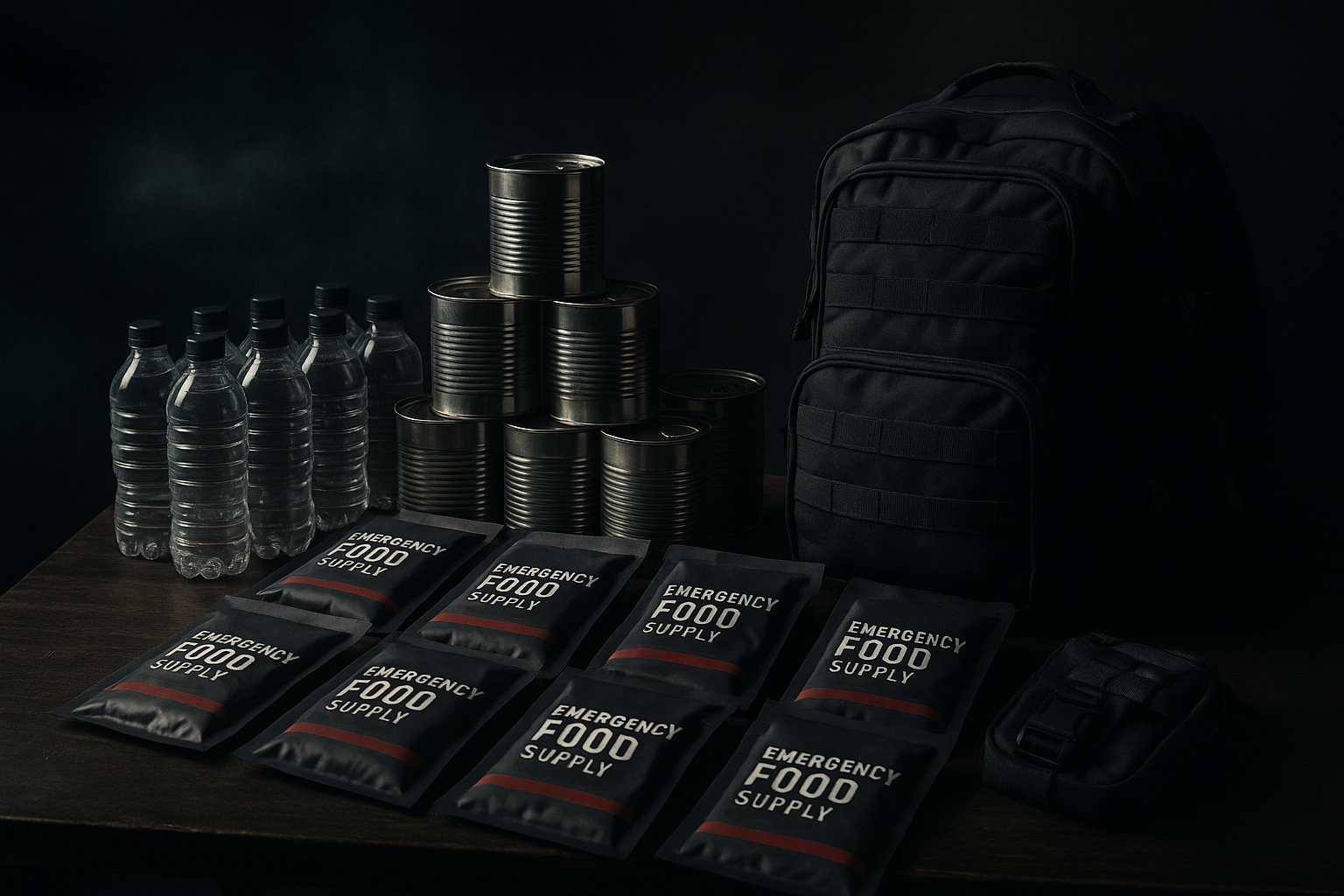
Why keep food for 30 days? Bad weather, no power, or no job can make it hard to get food. A 30-day food store means you have enough to eat when times are hard. Here's how to start:
- Daily Needs: Grown-ups need 2,000-2,500 calories and 1 gallon of water each day. For a family of four, that's 120 gallons of water for 30 days.
- What to Keep:
- Basics: Rice, beans, lentils, and pasta.
- Canned Stuff: Veggies, fruits, meats, and soups.
- Ready Foods: Peanut butter, crackers, snack bars, and nuts.
- Extra Nutrition: Vitamins, protein shakes, and freeze-dried eats.
- Keeping It: Store food in a cool, dry, dark spot. Use tight-seal jars, mark dates on them, and use old items first to keep things fresh.
Save Money Plan: Buy bit by bit. Start with must-haves like rice and beans, then add protein, canned stuff, and treats each week. Hunt for deals, buy big packs, and pick cheaper brands to save cash.
Having food for 30 days makes you feel safe and ready for surprises. Start slow - get a few more things each time you shop - and build your emergency supply bit by bit.
How to Build a 30-Day Emergency Food Supply for Preppers
Basics of Keeping an Emergency Food Stock
To set up a good 30-day food stock for emergencies, you must know how many daily calories and how much water you need, pick foods that last a long time, and plan how to store and switch them out.
Daily Needs for Calories and Water
Adults often need around 2,000–2,500 calories each day and kids need 1,500–2,000 calories, depending on how old and big they are. In tense times, you might need more calories.
Water is just as key. Aim for 1 gallon per person each day - or 1.5 gallons in hot spots. For a family of four, that means 120 gallons over 30 days. Don't skip water for pets: dogs may drink about half a gallon daily and cats around 8 ounces. Pregnant women, moms who are breastfeeding, and people on certain meds may need more water too.
Key Food Types for Emergency Kits
To keep healthy in a tough time, focus on these four main food groups:
-
Long-lasting staples: These are your stock basics. Load up on items like white rice, wheat berries, dried beans, lentils, and split peas. They are cheap, filling, and you can use them in lots of meals.
-
Canned stuff: Canned veggies, fruits, meats, and soups can last 2–5 years. Choose low-salt items and fruit in juice not syrup. Canned fish such as tuna, salmon, and sardines are great for protein and good fats.
-
Ready-to-eat foods: These are great when you can't cook, like in power cuts. Get peanut butter, crackers, granola bars, dried fruits, and nuts. Peanut butter lasts up to 5 years closed and is rich in calories.
-
Nutrient-rich choices: To stop shortages, add things like multivitamins, protein powder, and freeze-dried fruits and veggies. Freeze-dried food keeps most nutrients and can last 25 to 30 years if stored right.
Life Span of Items and When to Swap Out
Emergency food life varies, so it's key to have a plan to keep your stock fresh:
-
Short-life items (6 months to 2 years): These include canned goods, crackers, cereals, and packed snacks. Check every six months and use the oldest first, then restock.
-
Mid-life items (2 to 10 years): These are things like grains, dried beans, pasta, and freeze-dried meals stored well. For example, whole wheat flour lasts about 8 months, while white flour can last 2 to 3 years in a cool, dry spot.
-
Long-life items (10 to 30+ years): These are deep-storage basics like wheat berries, white rice, dried corn, and freeze-dried foods in sealed cases. Keep these in a cool, dry, dark place to help them last.
Heat affects how long food stays good. Every 10°F rise can cut food life in half. Try to keep your supplies between 50°F and 70°F.
Use a lasting pen to write clear labels with dates on all items. For things you'll use soon, add the month and year; for items you'll keep longer, just writing the year will do. Check your goods often - every six months for things you'll use fast, once a year for items that last a while, and every few years for stuff that stays for a long time - to keep all safe and ready to use.
Next, we'll learn how to make a 30-day emergency food stock, one step at a time.
Make Your 30-Day Food Store for Emergencies
Building a 30-day food store needs good planning and smart picks. Here's a guide to help you get ready for what your home needs.
Step 1: Check What Your Home Needs
Begin by listing all in your home and their food needs. Think about things like age, set diets, and any food problems. Don’t miss your pets - they need their own food in your stockpile, too.
Step 2: Stock Basic Foods
Choose foods with lots of calories that last long. Think of items like white rice, dried beans, lentils, pasta, and rolled oats. To make meals taste better, add cooking oils and simple spices like salt, pepper, garlic powder, and bouillon cubes. These are key for your emergency food.
Step 3: Add Protein, Fruits, and Veggies
Next, add more items with shelf-safe proteins and fruits. Canned meat like chicken, beef, tuna, and salmon are good for protein. For fruits and veggies, pick canned or dried ones with no extra sugars or salt. Peanut butter is good too, for high calorie and protein.
Step 4: Add Treats and Vitamin Pills
Don't forget about things that make you feel good. Add spices, coffee, tea, and sweet stuff like honey. Snacks like crackers, granola bars, nuts, and dark chocolate give energy and comfort. To make sure you have all needed vitamins, put a multivitamin in your kit.
Step 5: Get Ready with Tools
Lastly, get tools that let you make food if there's no power. You need a manual can opener, a small camp stove with fuel, simple cookware (like a pan, pot, spoon, and knife), and throw-away plates and tools. Also, have a battery radio for news and things to make water clean like tablets or a small filter for safe drinking water.
sbb-itb-1666494
How to Keep and Care for Your Food Stock
Good keeping is key to make sure your food stock for emergencies stays fresh and ready when needed. With smart moves and steady care, you can stop food from going bad and keep your 30-day store in great shape.
Basic Packing and Keeping Steps
To keep food good for a long time, put it in a cool, dry, and dark place at room heat. If your keep spot is wet, think about using dry packs or a small dry machine to cut wet air. A wet meter can help you watch wet air well.
Tight-seal boxes are the best guard against bugs, wet, and air. For big goods like rice and beans, food-level cans with tight lids are a good pick. Small eats can go in glass pots or plastic boxes with tight seals. If you like metal boxes, ensure they are safe or have a coat to stop rust.
Lift your food off the floor by using shelves or frames. This stops wet harm and helps air move. As light can hurt vitamins and change food taste and color, keep your items in a dark place or use boxes that keep out light. Make sure to mark each one clear and turn your stock often to keep it fresh.
Marking and Turning Your Stock
Use a forever pen to mark each box with when you bought it. Having a list of what you have helps you track and use old items first, cutting waste. While end dates from makers show when quality might drop, the food is oft still good past this date.
Look at your food often for bad boxes, signs of bugs, or items near their best dates. Use foods that are about to go bad in your daily meals, and swap them with new stock. Some find it helps to color-mark items by buy month for easy sorting.
While short-term items need often turning, long-term main parts need more care.
Keeping Long-Term Main Parts Safe
For foods meant for long keep, like grains and beans, take extra steps. Use Mylar packs inside food-level cans, with air-eating packs, to cut air. Seal the packs well to keep out wet and bugs.
Air-eating packs are really good for less air in sealed boxes, which stops bugs and slows the turning bad of oils. Use the maker's tips to know how much air eaters you need for your box size.
To keep bugs away, sprinkle food-grade dirt made from old sea stuff in grain boxes, following how to use it on the box. A good trick is to freeze bulk grains for a short time to kill any bug eggs. Just let the grains get back to room heat before sealing them in long-term boxes. Handle any bug or wet issue now to protect your full stock.
Easy Budget Tips and Smart Buying Plans
Making a 30-day food store for bad times doesn't need to empty your money all at once. By taking small steps, planned well, you can split the costs and make it easier to handle.
Step-by-Step Buying Plan
Rather than getting it all at one go, split your buys over weeks. This way, you can stick to your normal food money plan and still build your stock. Put a little money aside each week just for food for bad times, and buy one type of food at a time.
- Week 1: Begin with key things - pile up on stuff like rice, beans, and oats. These are the base of your store.
- Week 2: Bring in food high in protein such as canned fish, chicken, or peanut butter.
- Week 3: Add canned veggies, fruits, and soups to make sure your supply is full.
- Week 4: Finish your stash with comfort foods and any last needed items.
This step-by-step way not only makes it less hard but lets you use sales and deals as they come.
Tips to Save Money
When you've got your weekly buys planned, use smart ways to make your money go further.
- Buy in Big Amounts: Things like rice and beans are often cheaper when you buy a lot at once. Getting these during sales can cut your costs a lot.
- Pick Store Brands: Store or no-name brands often give the same good stuff as big names but cost less.
- Focus on High-Calorie Basics: Foods like rice, dried beans, and peanut butter give a lot of energy and are cheap - great for emergency stores.
- Check Clearance Areas: Look for lower-price canned goods that might have small marks or are close to their best-by dates. Just be sure to look at expiration dates and use older stuff first to keep things fresh.
If you can get into big stores, use their low prices for big buys. No membership? Join up with pals or family to share the cost and gains.
Lastly, timing is key. Plan your buys for big sale times, like when school starts again or after holidays. Keep a log of prices to know deals and make sure you buy when costs are low. These ways can help you set up a strong food store for bad times while keeping your spend low.
End: Make Your Own Emergency Food Supply Now
Making a 30-day emergency food kit is not just about getting ready for bad times - it makes sure you and your loved ones feel safe. Be it a storm, no power, or less money, having food on hand takes away the worry about your next meal.
The steps are easy and don't cost much. You don't need to use lots of money or big spaces. By using the simple plan we shared, you can slowly build up a solid food store in four weeks without spending more at the store. Main foods like rice, beans, and canned meat are key, making it easy and smart to get ready.
Your stash of emergency food keeps growing - it changes and improves. Keep your food fresh by switching old for new, and check what you have often. Must-haves like rice, beans, oats, canned meat, and dried fruits and veggies are important, while tasty extras and spices make your meals fun, even when times are tough. Change things up often and keep adding to what you have.
Start little - throw an extra pack of rice or a couple of cans of food in your cart when you shop next. Every bit helps you get closer to being safe and self-reliant. The work you do now will help you feel sure and ready for anything that might come.
FAQs
Making a 30-day food kit with little money is easy if you pick cheap, long-lasting basics like rice, beans, pasta, canned veggies, and canned meats. The trick is to buy these bits slowly, so you don't have to spend a lot of money at once.
Another good idea? Buy in big amounts. Stores that sell in bulk often offer good deals on a lot of non-perishable foods. Watch for sales or cuts on foods that keep long, and make meals with cheap, easy stuff to keep your food stores in good shape and useful. To help what you buy last, store your food in boxes that let no air inside - this keeps it good longer and saves money as time goes on.