
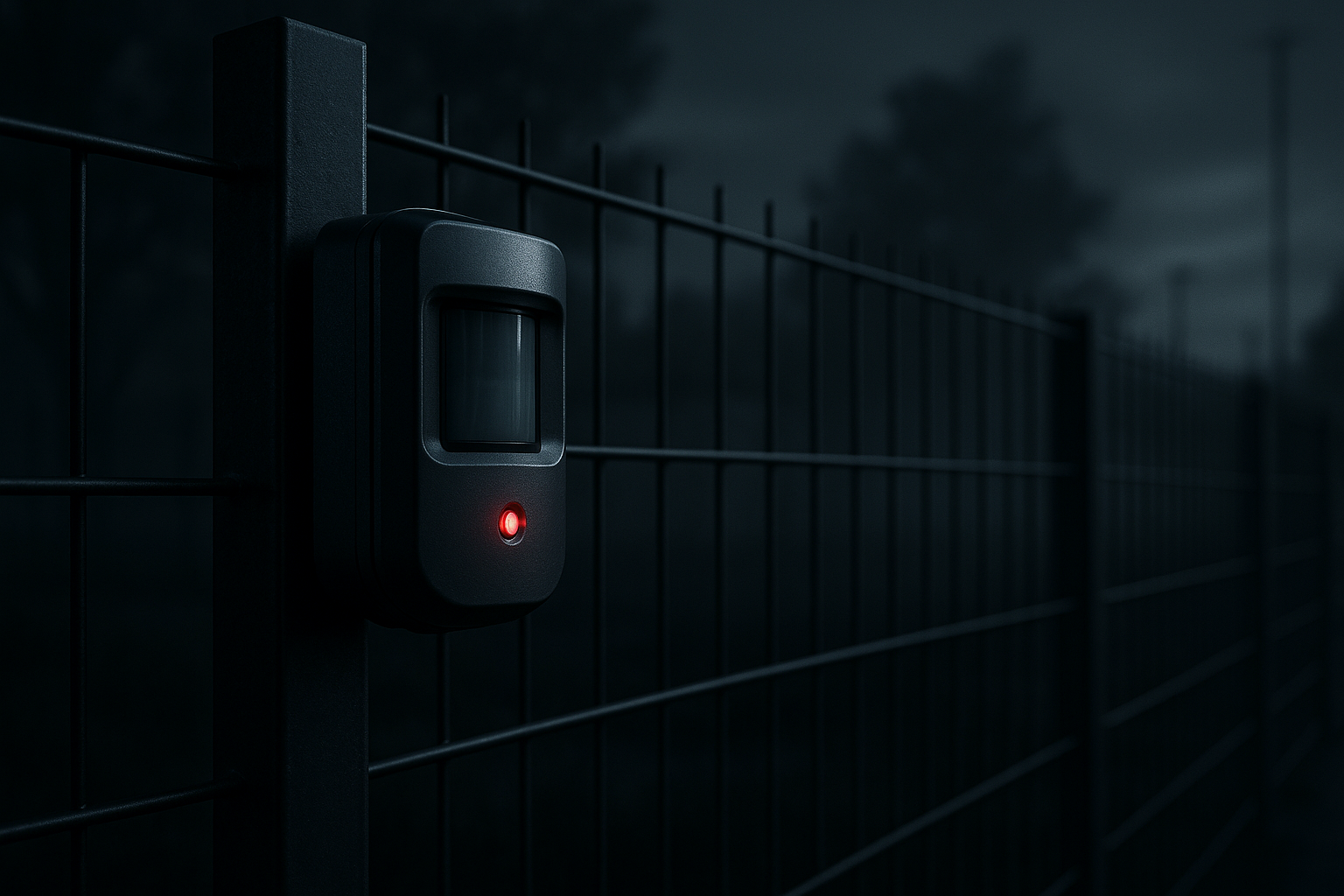
Motion sensors are a key tool for securing your property by detecting movement and triggering responses like alarms, lights, or alerts. They monitor areas for changes in heat, sound, or vibrations, making them effective for protecting gates, fences, and pathways. Common sensor types include:
- Passive Infrared (PIR): Detects body heat, ideal for residential and outdoor areas.
- Microwave: Covers larger areas and can sense motion through thin walls or glass.
- Vibration: Senses physical disturbances, great for fences and gates.
- Dual-Technology: Combines methods (e.g., PIR and microwave) to reduce false alarms.
Proper placement, such as near entry points and blind spots, is critical for effectiveness. Sensors integrate seamlessly with systems like cameras and lights, and regular testing ensures reliability. For added protection, you can pair motion sensors with lighting and remote monitoring systems. Backup power sources like batteries or generators keep them functional during outages.
Quick Comparison:
| Sensor Type | Detection Range | Best Use Cases | Cost (USD) |
|---|---|---|---|
| PIR | 30–40 ft | Residential areas | $15–$50 |
| Microwave | Up to 100 ft | Large spaces, harsh conditions | $50–$200 |
| Vibration | Barrier-based | Fences and physical barriers | $40–$150 |
| Dual-Technology | 30–100 ft | High-security, false-alarm reduction | $60–$250 |
To secure your perimeter, choose sensors based on your property’s layout and needs, and integrate them into a broader security system for optimal results.
What Are Perimeter Security Sensors? - SecurityFirstCorp.com

How Motion Sensors Work: Technology and Operation
Motion sensors work by continuously monitoring their assigned area to establish a "baseline" or normal state. When this baseline is disrupted - whether by movement, heat changes, or vibrations - the sensor immediately sends a signal to the control panel. This triggers a response, such as activating alarms, lights, or cameras, and sending instant notifications via SMS, email, or mobile apps.
Types of Motion Sensors for Perimeter Defense
Passive Infrared (PIR) sensors detect changes in infrared radiation, or heat energy, emitted by warm objects. When a person moves through the sensor's field of view, the sudden shift in body heat is quickly detected. Since PIR sensors don’t emit energy, they are energy-efficient and harder for intruders to notice. They work especially well outdoors, where temperature contrasts are more pronounced, and can often be configured to ignore small animals, reducing false alarms.
Microwave sensors operate by emitting microwave signals and analyzing the returned signals. Movement within the sensor's field disrupts these signals, triggering an alert. These sensors can cover larger areas and even detect motion through certain materials like thin walls or glass. However, their high sensitivity can sometimes lead to false alarms caused by environmental factors like moving vehicles or swaying trees.
Vibration sensors take a different approach by detecting physical disturbances on solid surfaces. Installed on fences, gates, or walls, they sense vibrations from activities like climbing, cutting, or tampering. This makes them ideal for detecting direct breaches or tampering attempts.
Dual-technology sensors combine two detection methods, such as PIR and microwave, to improve accuracy. Both detection methods must be triggered simultaneously to activate an alarm, reducing the chances of false alerts caused by environmental factors that might affect only one method.
Here’s a quick comparison of common sensor types:
| Sensor Type | Detection Method | Common Use Cases |
|---|---|---|
| PIR (Passive Infrared) | Detects changes in heat energy | Residential perimeters, indoor/outdoor areas |
| Microwave | Emits and receives microwave signals | Large outdoor spaces, commercial properties |
| Vibration | Detects physical disturbances | Securing fences, gates, or walls |
| Dual-Technology | Combines PIR and microwave methods | High-security zones, false-alarm-prone areas |
Connecting Sensors to Security Systems
Motion sensors can connect to security systems through either wired or wireless setups. Wired systems use physical cables for reliable signal transmission, while wireless sensors rely on radio frequencies, offering more flexibility in placement.
The control panel serves as the central hub, processing signals from the sensors and determining the appropriate response. Real-time alert systems provide detailed information, such as which sensor was triggered and the exact time of the event.
When integrated with smart home technology, motion sensors can work alongside other devices. For example, a triggered motion sensor could automatically turn on outdoor lights or start recording on connected security cameras.
Backup power sources, like battery backups or generators, ensure that motion sensors remain operational during power outages. This redundancy is crucial for maintaining security during emergencies.
Routine system testing is key to ensuring all components function properly. Many modern systems include diagnostic tools that monitor sensor performance and communication with the control panel. These tools can alert you to issues like sensor malfunctions or low battery levels before they compromise your security. By maintaining regular checks and leveraging these advanced features, you can optimize the performance of your perimeter defense system.
Where and How to Install Motion Sensors
Installing motion sensors involves strategically placing them in areas most vulnerable to intrusion while ensuring they provide maximum coverage. Start by assessing your property’s layout and identifying potential risks.
Identifying High-Risk Areas
Begin by walking the perimeter of your property at different times of the day. Pay close attention to entry points like doors, windows, and gates - these are the most common access routes for intruders. Additionally, focus on areas with limited visibility, such as those concealed by landscaping, utility structures, or fences.
Look for blind spots where someone could approach undetected. These might include spaces behind outbuildings, near HVAC units, or areas where thick vegetation creates natural hiding spots. Try viewing your property from an intruder's perspective - if you can move toward a building or valuable asset without being easily seen, that’s a clear indicator of a high-risk zone.
If your property has experienced security incidents in the past, use those as a guide. Break-in attempts or signs of trespassing often highlight vulnerable areas that require immediate attention. Properties with outdoor equipment, storage areas, or secluded access points typically demand extra coverage.
According to industry data, well-placed motion sensors can reduce successful perimeter breaches by up to 60% compared to properties with poorly positioned or insufficient sensors. This highlights the importance of a detailed site assessment before installing your sensors.
Optimal Placement Techniques
Position sensors 6 to 8 feet above the ground, angling them downward to maximize coverage. This height strikes a balance: it’s high enough to prevent tampering but low enough to detect human movement effectively. Avoid placing sensors too low, as they may pick up small animals, or too high, which can limit their ability to detect activity closer to the ground.
Face sensors toward likely approach paths rather than aligning them parallel to walls or fences. This ensures intruders walk directly into the detection field rather than skirting along its edges.
Be mindful of environmental factors. Avoid placing sensors near moving vegetation or in direct sunlight, as these can interfere with performance. For fences, consider installing sensors on both sides to detect climbing or tampering. Use vibration sensors on fence posts to catch physical disturbances, and pair them with PIR (Passive Infrared) or microwave sensors to monitor nearby movement.
For outdoor installations, weatherproofing is critical. Choose sensors designed to withstand your local climate, including extreme temperatures and moisture. In areas prone to harsh weather, dual-technology sensors can help minimize false alarms caused by environmental conditions that might affect only one type of detection.
Testing and Adjusting Sensors
Once installed, test your sensors to ensure they’re working as intended. Walk through their detection zones while in test mode. Approach from different angles and distances to understand the actual coverage pattern, which may vary slightly from the manufacturer’s description.
Test sensors under various lighting conditions and fine-tune their sensitivity to reduce false alarms. Start with the manufacturer’s recommended settings, then adjust based on real-world performance. For example, if wildlife or environmental factors frequently trigger false alarms, lower the sensitivity. If the detection range feels inadequate, increase sensitivity gradually while monitoring for false positives.
Many modern sensors include features like "pet immunity" or dual-technology designs to reduce false triggers while maintaining accurate detection for human movement.
Keep a record of your test results, sensitivity settings, and any environmental changes that might affect sensor performance. Seasonal factors like falling leaves or snow can impact operation, so adjust settings as needed. Similarly, changes to landscaping or nearby structures may require repositioning or recalibrating the sensors.
For those interested in tactical preparedness, platforms like AgentXSurvival offer specialized advice on sensor selection and installation techniques. These resources are particularly useful for off-grid properties or high-security scenarios where robust perimeter detection is essential.
sbb-itb-1666494
Selecting the Right Motion Sensor Technology
Finding the right motion sensor technology boils down to your specific security needs, the layout of your property, and, of course, your budget. Each type of sensor has its strengths and trade-offs depending on where and how you plan to use it.
Passive Infrared (PIR) sensors are a go-to choice for residential spaces and small businesses with controlled environments. They’re affordable and dependable but may struggle in very hot climates where the temperature difference between a person and the background is minimal.
Microwave sensors stand out in tough weather conditions and can even detect movement through some non-metallic barriers. This makes them a great fit for large open areas or properties with frequent wildlife activity. However, to avoid false alarms - especially from vehicles - place these sensors away from busy roads.
Vibration sensors are a more specialized option, ideal for securing perimeters. Mounted on fences or walls, they detect even the smallest disturbances, like climbing or cutting attempts, with impressive precision.
Dual-technology sensors combine two detection methods, typically PIR and microwave, requiring both to trigger an alert. This dual approach helps minimize false alarms but comes with a higher price tag.
When selecting a sensor, keep your local climate in mind. For extreme conditions, microwave and dual-technology sensors tend to perform better than PIR models. On the other hand, vibration sensors may require frequent calibration in areas with high winds. To help you weigh your options, here’s a quick comparison:
Motion Sensor Comparison Chart
| Sensor Type | Detection Range | Weather Resistance | Installation Difficulty | Cost (USD) | Best Use Cases |
|---|---|---|---|---|---|
| PIR | 30–40 feet | Good | Easy | $15–$50 | Residential properties, controlled areas |
| Microwave | Up to 100 feet | Excellent | Moderate | $50–$200 | Large open spaces, harsh climates |
| Vibration | Barrier-dependent | Excellent | Moderate | $40–$150 | Fences, walls, physical barriers |
| Dual-Technology | 30–100 feet | Excellent | Moderate | $60–$250 | High-security areas, false alarm reduction |
Beyond the initial purchase price, factor in maintenance costs. Annual upkeep for PIR and microwave sensors usually falls between $20 and $50, while dual-technology units may cost $30 to $60 per year. Vibration sensors might need extra attention after severe weather events.
If you’re planning to integrate motion sensors with existing security systems, cameras, or remote monitoring platforms, check compatibility before buying. Many modern sensors support both wired and wireless setups, and higher-end models often include features like smartphone alerts, cloud connectivity, and even AI-driven analytics.
For properties requiring high-level security, platforms like AgentXSurvival offer expert recommendations on tactical-grade motion sensors designed for off-grid and long-term use.
To achieve well-rounded coverage, consider a mixed approach. Use PIR sensors at entry points and high-traffic areas, microwave sensors along open perimeter zones, and vibration sensors on existing barriers. This strategy balances cost and functionality, giving you a comprehensive security system.
Improving Perimeter Security with Motion Sensors
Combine motion sensors with lighting, remote alerts, and backup power systems to create a multi-layered security setup that’s both effective and reliable.
Adding Motion-Activated Lighting
Motion-activated lighting doesn’t just detect intruders - it actively discourages them. By illuminating the area when motion is detected, these lights startle potential intruders and make their presence obvious. Security professionals emphasize that well-lit perimeters are less likely to attract break-ins because they increase the likelihood of being seen or caught.
Position lights strategically at entry points and along fence lines, ideally 8 to 12 feet above the ground, and angle them to cover all approaches while avoiding glare. Use weatherproof fixtures designed for outdoor conditions, and for areas without convenient electrical access, solar-powered units can be a practical option. Overlapping light zones are key to eliminating dark spots that intruders might exploit.
A logistics company in Texas reported a 40% drop in perimeter breaches after integrating motion-activated lights with their sensor network. This combination not only improved response times but also discouraged intruders altogether.
Another bonus? These lights enhance the effectiveness of your security cameras by improving visibility, making it easier to assess threats when sensors are triggered.
Setting Up Remote Monitoring and Alerts
Remote monitoring takes your motion sensor system to the next level, turning it into a 24/7 security network. Modern systems connect sensors to control panels and mobile apps, delivering real-time alerts whenever movement is detected.
Apps from brands like Ring, SimpliSafe, and ADT allow you to receive instant notifications, view live camera feeds, and adjust your system remotely. Many of these apps also integrate with smart home platforms, giving you complete control over your security setup right from your phone or tablet.
For an added layer of protection, professional monitoring services provide 24/7 surveillance with trained operators who can dispatch emergency responders if you’re unable to respond to alerts. These services typically cost between $10 and $50 per month and often include features like cloud storage for event footage and integration with other security devices.
To ensure everything works as intended, test your system regularly. Walk through detection zones and confirm that you’re receiving alerts promptly. Adjust sensor sensitivity and notification settings if needed, and address any weaknesses you uncover during testing.
Pair these automated tools with well-thought-out tactical measures to ensure your security is airtight.
Tactical Preparedness Resources
To complement your sensor and lighting system, consider tactical solutions that keep your security operational during emergencies. AgentXSurvival offers a range of resources for off-grid and long-term preparedness. Their collection includes motion sensors built to withstand extreme conditions, EMP protection tools, and guides for maintaining security during power outages or grid failures.
EMP protection is especially important when your security relies on electronics. AgentXSurvival highlights EMP-resistant motion sensors, surge protectors, and backup power options like solar panels and battery banks to ensure your system remains functional even in extreme scenarios.
For those on a budget, the platform provides DIY methods to enhance your setup. These include installing wireless motion sensors paired with solar-powered lights, using reflective tape or warning signs as deterrents, and integrating low-cost cameras with free mobile apps for affordable monitoring. Their guides cater to various property types and budgets, making it possible to build a strong defense without requiring professional installation.
They also offer self-defense training materials to prepare you for situations where a human response is necessary. Their tactical defense guides equip you with the skills to handle security breaches effectively, adding an essential layer of preparedness to your automated systems.
For complete off-grid power independence, explore their DIY thermal generator guides. These generators can keep your sensors, lights, and monitoring systems running continuously during extended outages. This is especially useful for remote properties or areas prone to frequent power disruptions, ensuring consistent security no matter the circumstances.
Conclusion: Building Effective Perimeter Security with Motion Sensors
Securing your property starts with selecting the right motion sensors, placing them strategically, and integrating them into a broader security system. These steps work together to create a dependable perimeter defense.
Begin by choosing motion sensors that fit the specific needs of your property. Factors like layout and local environmental conditions - such as weather or terrain - play a critical role in sensor performance. Once selected, position your sensors carefully. Key areas include gates, fence lines, and windows. Overlapping coverage is essential to eliminate blind spots, and walking through detection zones can help uncover potential vulnerabilities.
To strengthen your defense, integrate motion sensors into a comprehensive security system. When movement is detected, the system should trigger additional measures like cameras, lighting, and real-time alerts. This layered approach not only boosts response times but also significantly reduces the likelihood of successful intrusions.
Regular maintenance is just as important. Environmental changes - like growing vegetation or new structures - can impact sensor effectiveness. Routine testing and adjustments ensure your system remains reliable over time. With the U.S. security services industry valued at $47.8 billion in 2023, it's clear that demand for advanced security solutions continues to grow.
For those interested in off-grid security strategies, AgentXSurvival offers valuable resources. Their expertise includes backup power solutions and maintaining operational security during grid failures. Visit AgentXSurvival to explore tools and tips that keep your perimeter protection strong, even in challenging circumstances.
FAQs
To get the best results, install motion sensors at critical entry points like gates, driveways, and doors. Mount them at a height of 6 to 8 feet to ensure optimal coverage while keeping them out of easy reach. Tilt the sensors slightly downward to reduce the chances of false alarms from small animals or other minor movements.
If you're covering a larger area, use multiple sensors with overlapping coverage zones to eliminate blind spots. Steer clear of placing sensors near heat sources like HVAC units or spots with direct sunlight, as these can disrupt their performance. Make it a habit to test and adjust the sensors regularly to maintain reliable protection for your perimeter.
Dual-technology motion sensors are designed to minimize false alarms by using two different detection methods - commonly passive infrared (PIR) and microwave technology. For the alarm to activate, both systems must detect movement at the same time. This dual-layered approach significantly reduces the likelihood of false alerts caused by pets, shifts in temperature, or other environmental changes.
Because of their dependable performance, these sensors are a great choice for securing perimeters in homes and businesses alike.
Integrating motion sensors into your security system and smart home setup can boost both safety and convenience. To get started, check that your motion sensors are compatible with your existing devices, like smart hubs or security cameras. Many modern systems make this easy by offering integration through Wi-Fi, Bluetooth, or dedicated smart home platforms.
Placement matters a lot. Install motion sensors in areas where people frequently walk or at vulnerable spots, such as doors and windows. Steer clear of placing them near air vents or heat sources, as these can cause false alarms. After installation, test the sensors to ensure they work smoothly with other devices - like triggering lights or sending alerts to your phone. When set up correctly, motion sensors can become an essential part of a well-rounded security system.